Showing posts with label Ships. Show all posts

Sunday, February 3, 2013

My Own Pivot to the Sea

Admiral Greenert, Gen. Amos and Admiral Papp 
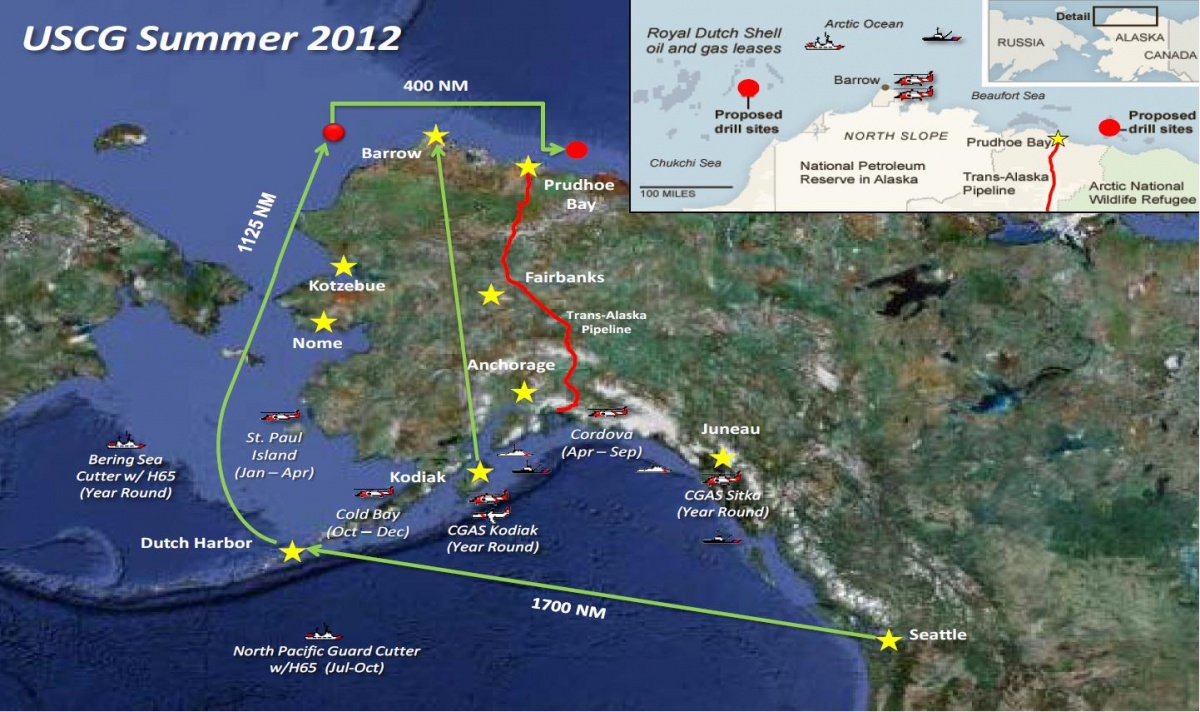
Coast Guard NSC deployment to Arctic in Summer of 2012
The focus of this blog for the past five years has often been on the ongoing efforts by our land forces in Iraq and Afghanistan as they attempted to confront a landscape that provided fertile ground for ideologies who resisted the connectivity spreading across the planet in the past twenty some years since the end of the Cold War. The efforts of the United States and her allies will have to wait the test of time to see if any worthy legacy will honor the cost in lives, treasury and the loss of focus on other areas of our security, most evident in the maritime arena.

In that vein, I am going to be devoting even more attention to our sea services and the importance of owning the legacy of being a maritime nation. I have added a heading for blog links devoted to naval centric topics and encourage all to read them frequently.

This past week I was privileged to attend the West 2013 Conference in San Diego, where I was able to attend several panel discussions and a very informative luncheon where the guests were the Chief of Naval Operations ADM Jonathan W. Greenert, Commandant of the Marine Corps Gen James F. Amos, and Commandant of the Coast Guard ADM Robert J. Papp Jr. who participated in a round table discussion of the future of the sea services. I have linked the video below, and encourage all to take an hour to listen carefully the their words.

Another, panel I attended discussed the Chinese Navy and her intentions, be they a challenge or a potential partner in maintaining safe passage for all maritime global commerce. That video is also below.
LCS's Independence and Freedom
One major naval centric blog, Information Dissemination, saw the return to frequent blogging by their astute commander, Galrahn who in this post, questions the value of the LCS class ships, and invited this guest post by Robert 'O Work the Under Secretary of the Navy. Excellent posts by both gentlemen as well a give and take in the comments sections.

Chinese shipyard

Mirroring some of the concerns voiced by the panel on Chinese Naval intentions, Galrahn posted this piece that if the Chinese take a page from FDR's Depression era shipbuilding program, will protend a fleet three times larger than today's by 2020. Galrahn concern is the following.

What does the PLA Navy look like if the Chinese decide to retain their shipbuilding sector through this downward economic period by keeping only 30 (~15%) of their major shipyards open via governemnt orders? I don't know what that would look like, but I will note that 30 major shipyards building navy ships is the same shipbuilding capacity the United States leveraged to build all warships in World War II. While no one would expect China to field ships at the same pace the US did in WWII, even if China adds orders of a single large PLAN vessel or multiple smaller vessels for 30 shipyards over 5 years while sustaining current construction pace for PLA Navy and government maritime agencies, the size of the PLAN and associated government maritime agencies could potentially triple by 2020.
Now tell me what it looks like if the Chinese government sustains 30%, or even 50% of their shipbuilding sector with government orders for PLA Navy and government maritime agency vessel orders. In theory, the Chinese government could decide to build their own 1000 ship Navy over the next 5 years by simply buying 2 ships at only 100 of their large shipyards for the sole political and economic purpose of saving the 50% of shipbuilders who are expected to go out of business over the next 2-3 years, with the very real alternative being that all those manufacturing workers become unemployed.

If this is a topic of interest, read the links. All of them. For the record, the title is a Chinese proverb that when translated literally means 'when the wind of change blows, some build walls, while others build windmills.' It is another way of saying it is better to adapt than to be stubborn. When I think about the variety of topics discussed, I thought the proverb fit, not just the Chinese but us as well.
 
Read the whole post: 风向转变时,有人筑墙,有人造风车


Sea Service Chiefs Round table West 2013
 
Panel: Chinese Navy: Operational Challenge or Potential Partner?


Wednesday, November 30, 2011

Thoughts on gaining a strategic balance in the Pacific

U.S. Navy
Chinese Navy

A couple of day ago I discovered this opening paragraph on a blog that I read daily.
I'm going to slow down my posting as we approach the holiday season. The reason is actually two fold. First, my wife is due to have our third child at the end of December, and I still have many things to get done before then. Second, Christmas is approaching and I am absolutely committed to finish reading all the books I have purchased and not yet read this year so I can restock via a delivery from Santa.

With the budget basically being a 90 day hanging curve-ball, I figure now is as good a time as any to step back awhile.
I became resigned to the terms that Galrahn, master of the most cutting edge naval centric blog, Information Dissemination had put forth. But, as the next couple of days have shown, before he slows down or begins to fore-go sleep and free time, when joy is visited on the good master's home.

But in advance of that time and for the present, Galrahn has put up two dandy posts that exhibit his insight and ability to gin up the questions and be Socratic in his approach to posing questions about the future and utility of having a strong navy. He began with a post where he begins discussing US primacy in Asia by extensively quoting from a speech by Malcolm Turnbull, an Australian government minister.
...A humiliation that in the 20th century included the brutality of the Japanese occupation and rape of Nanjing, and in the 19th, the Opium Wars which were the equivalent of the Medellin Cartel sending a nuclear submarine up the Potomac and threatening, successfully, to destroy the Capitol and White House unless the US disbanded the Drug Enforcement Agency...
Galrahn, goes on to comment on this speech.
From a strategic perspective, I note that - finally - we see a legitimate political leader (and as expected, outside the US) at least attempting to raise the topic of policy options should US primacy not be maintained in the Pacific.
He then adds a link and quotes from an article from Hugh White in the NYT's, that supported Trunbull's views, then ends with this Socratic question.
As China builds up military resources and capabilities commensurable with their economic growth, how should the US respond? Whose strategic vision of the future includes US prosperity and security regardless of whether China is the largest economy in the world or not?
Read more:
US Primacy in Asia: Not Inevitable


Then before the day was even half over another thoughtful post appeared; based on the previous primacy post, and assumed top billing as it added another log on the great meeting fire circle that hosted the converging views that were sure to be drawn into the discussion he had stoked.  Relating back to an earlier time when he was invited out to meet with his globe trotting uncle who introduced him to how global business works by bringing him along on several important meetings.
I learned a lot, no question, and many things I learned that week have stuck with me through the years, but there was one 3 hour meeting I attended where those gathered discussed the shift in the late 70s away from the gold standard towards the global economy today, and over time I have come to accept their argument as a quiet truth understood by those on the global side of big money: The Gold Standard was replaced by the proverbial F-16 Standard in 1979 to save the world during a global energy crisis. It was at that time America's debt economy was born.
Because of overwhelming US military power and because the US was willing to use force when necessary to protect interests, it was believed that no competitor to the US dollar would ever emerge until a competitor to the proverbial F-16 emerged first. Keep in mind, these are bankers and strategy consists mostly of risk management in their world. The only safe bet in the emerging global economic order that included many new players participating as resource contributors was the raw power of the United States to back the US currency by force.
After watching the banking crisis of the last few years and the war of the last decade, I frequently wonder if the proverbial F-16 standard even exists in the minds of global bankers anymore.
Basing the remainder of the post on an article by author Robert Kaplan, Galrahn ends with this analogy.
To use a simplistic and imperfect historical analogy as bloggers tend to do, I would suggest strategic balance in East Asia is achieved as long as the US emerges as Athens and China emerges as Sparta, and the global security environment and global economy is managed better than it was by the ancient and modern Greeks respectively. If that happens, the 21st century has an opportunity for a prosperous and promising future. However, if China strives to become Athens and US policy continues to be driven by the Spartans in the DoD; Australia, everyone else in the Pacific, and Washington, DC should not only be preparing for, but expecting war. 
Read more:
The AEGIS Standard Towards Strategic Balance

Galrahn raises important questions that like a thread of logic draws in information from a galaxy of sources to craft important questions and provoke thought about the role that the US Navy has played and needs to play in the future.