Showing posts with label United States. Show all posts

Sunday, February 26, 2012

Time to follow Bismark's advice and Stop

How Afgan's view America and NATO
Adios, Afganistan
Diplomacy by cruise missile


From the outset of this blog, I have remained a supporter of the efforts of our government and NATO nations to try and change the course of a culture mired in a medieval epoch that retarded it's advancement into modernity and even more troubling and dangerous for humanity, remained a refuge for those who wished to destroy and retard the advancement, that most of the world has seen in the past half-century.

That is why after careful consideration of the events of the past year, coupled with the total lack of progress in changing the political landscape in Afghanistan, and the failure of our own forces to be able to both penetrate the mindset, as well as understand the most basic tenants of the culture they are trying to nurture, has led me to conclude that is is time to stop, and dramatically change course in Afghanistan.

I ignored the call to change courses two years ago, when George Will wrote this in the Washington Post, August 31, 2009.

U.S. forces are being increased by 21,000, to 68,000, bringing the coalition total to 110,000. About 9,000 are from Britain, where support for the war is waning. Counterinsurgency theory concerning the time and the ratio of forces required to protect the population indicates that, nationwide, Afghanistan would need hundreds of thousands of coalition troops, perhaps for a decade or more. That is inconceivable.
So, instead, forces should be substantially reduced to serve a comprehensively revised policy: America should do only what can be done from offshore, using intelligence, drones, cruise missiles, airstrikes and small, potent Special Forces units, concentrating on the porous 1,500-mile border with Pakistan, a nation that actually matters.
Genius, said de Gaulle, recalling Bismarck's decision to halt German forces short of Paris in 1870, sometimes consists of knowing when to stop.
At the time, I took Will to task for abandoning the children, and especially the future generations of young women of Afghanistan to a life with no future.  Several things have happened in the past two years to finally bring me to declare that Will was right in his recommendation to pull back and in a phrase, practice what could be termed "diplomacy by cruise missile." Harsh and unfeeling as that appears, it makes sense that if we pull back, and make it plainly known to whoever ends up claiming to govern Afghanistan, that as long as they don't harbor those factions that threaten the world, including growing opium, or terrorists, that how they govern their countrymen is the choice of the people, whom have proven able to cast off any faction who tries to impose an unpopular rule set. Breaking those conditions, will bring a rain of missiles, or surgical strikes by special Op's teams to eliminate the threat. Hence we would be operating under the same rule set that Afghan's have lived with since before the Age of Alexander the Great.

Several events, including this from Tim Lynch, who's experience in Afghanistan is legendary, and sums up ten years in Afghanistan with three pictures.
Ten years ago, Afghans were thrilled to see us and thought that finally they could live in peace and develop their country

Five years ago they watched us flounder - we stayed on FOBs and shoveled cash by the billions into the hands of a corrupt central government that we insisted, despite clear evidence to the contrary, was a legitimate government - one that had to be supported at all costs. We raided their homes at night and shot up civilians who got too close to our convoys, we paid for roads that did not exist and, because of the "force protection" mentality, most Afghans thought our soldiers were cowards because they never came to the bazaar off duty and unarmored to buy stuff like the Russians did. In fact, every bite of food our soldiers consumed was flown into country at great expense, so in a land famous for its melons and grapes our troops ate crappy melon and tasteless grapes flown in by contractors from God knows where.

Now, they want to shoot us in the face. Except for the klepocratic elite who want us to give them billions more and then shoot us in the face.
We are not innocent in this relation deteriorating to the point that saw our President apologizing yet again for American behavior colliding with the sensitivities of the people of Afghanistan and those of the Islamic faith. The fact that after ten years, we can't seem to educate our own forces about these sensitivities seems to point to a growing lack of discipline and the old saying, CRS, "can't remember shit. The continued desecration of the enemy, add to this perception by a people who have been raised in a culture that has placed their religious icons to a point of veneration beyond the highest of any on earth. Add to that reality, when things spin out of control, and American officers are murdered inside the most secure Afghan government ministry, President Karzi, ignores their deaths, and continues position himself against the US in a effort to survive after our exit.
It is high time we obliged him, the Taliban, and the Afghan people so intent on being left to their own devices. We should announce our withdrawal with clear conditions that hell in it's most vivid images will rain down on Afghanistan or any country harboring the seeds of terrorism. Also that we will provide assistance to any nation that abides by the conditions of acknowledging human rights in their most basic form. I was part of the Vietnam Experience, and our options to influence the aftermath was limited by external forces.  Today, conditions would dictate a different outcome, that would secure our security against attacks like 9/11, by making the source-code country on notice that hell will come their way if they abide those who wish us harm.


Sunday, August 7, 2011

Why We're All Mad As Hell at Washington

Cutting the credit rating

Where is it going to come from?


Summer brings the posting on most blogs to a slower pace, as some like this site slow down, or for some, a pause as the go on vacation. The news of the July was dominated by a house divided upon itself, as those we charge with leadership and the expectation to rise above the bubbling mass of goo that most Americans have come to see in Washington; played chicken with our future in order to appeal to their hardcore constituency.

Usually, I refrain from taking any political side, but a post today by blog friend, author and geo-strategist Thomas PM Barnett perfectly articulated my feelings about the current state of our economy, and the lack of visionary leadership by all who are charged with keeping the country safe, strong and prepared for the future. Barnett's post starts off by commenting on a column by Thomas Friedman in the NYT's and excerpting comments from Kenneth Rogoff, an economist from Harvard who Tom paraphrases this way.
Rogoff's point is simple but very revealing: we've all known this crisis to be a financial one versus the usual biz cycle. Recovering from biz-cycle contractions is historically a quick affair, but recovering from a financial crisis is typically more the 5-7 years horizontal scenario. Rogoff's key insight is to state the obvious (for most of us consumers): the "recovery" of the business cycle has already arrived and it changed nothing for most people, because the hangover is a long-term credit contraction - i.e., the huge deleveraging.
This led Barnett to bring the current crisis home, and describe how it affected him personally. His observation and feelings are shared by all of us Americans, who have struggled to maintain their mortgages, paid their taxes, hustled to recover income lost due to the downturn, and hold out hope that both parties will gin up some backbone to understand that we ALL, are plenty pissed off at everybody in Washington. See if his words don't sound like that angry voice in your own head?
I feel this personally in spades: built a nice big house in 05-06 at the height of the bubble (of course, I walked away from the old house with an inflated sum, so no complaints), so the house is priced in that way - as is my mortgage. At the time, no problem, because I'm getting paid in a bubblicious way.
Then the crisis. All of a sudden everyone says my labor is worth a whole lot less. Still love me and the work, just want to pay a lot less. Everybody is doing this, except my mortgage holder. He wants that to stay the same. 
I'm lucky. Despite losing a ton of income over the past two years, I've scrambled and replaced the vast majority. I have to work three times as hard for 5 times as many customers, but I'm managing because I'm not reliant on any one job and I'm willing to hustle.
So I do the right thing and don't strategically default on a mortgage, which is tempting, not because I can't pay it because I can - and am. It's tempting because, geez, why should I pay off this debt honorably across this long crunch while so many others get help or simply run away? Because when I do, I subsidize all their behavior.
Tom goes on to point out, what many of us who work hard have come to feel like, the problem!
Worse, I have a White House that claims I'm the problem because I don't pay enough taxes and so it wants to soak me because that's an evil state of affairs. Funny thing is, I pay the Fed a whopping sum every year - about three times as much as my dad ever made in a year while he supported us seven kids. So naturally, when more than one out of every three dollars I make goes to the government, I feel like I'm supporting all sorts of programs for the needy, plus I'm doing the right thing by the mortgage, plus I keep up my charity donations, plus I pay 3 private grade school tuitions (saving the public schools) and two public college tuitions (eldest daughter and wife). I don't ask for any hand-outs from the government. Hell, I fund them and am glad to do so. But then I'm told I'm the reason why the government is so in debt (not enough taxes from the "rich") and yet I'm the dupe who continues honoring that mortgage from another era while paying for the bail-outs of those who can't. And you know, I don't feel like I'm the problem - or evil for doing all that.
Tom Barnett has been called many things, but the one that stands out, is of being an optimist about the future. When I read this next paragraph, it gave me pause that he glass was full and he had reached the point that he would not stand by and take it anymore.
But no, I have no optimism about the future of our economy right now. I don't how I could. I know what I know about globalization and America's long-term strengths, but I look at Washington and I see clueless politicians with no business experience spending all their time trying to tear each other down and I wonder why I must suffer these fools.
His final words ring like the battlecry from the discouraged middleclass.
But most of all, I f--king hate the government right now for being such incompetent boobs. I would be happy to see them all lose in 2012 - and will vote that way.
Read more:
Rogoff's "second great contraction" and why I'm mad as hell at Washington

With a growing number of Americans, 47% paying no federal income tax, against the shrinking 53% who do, and with the crisis at hand, raising taxes in some form is in the cards, but as Rogoff suggests, it must be on something other than personal income; like a tax on gasoline or a national sales tax. Otherwise if it is raised on those who earn over $250,000, then even the lowest should have to pay something, at least a few percentage points to give them a dog in the fight.

Friday, January 14, 2011

The Dragon and the Eagle Meet

The Dragon and Eagle


from Economist.com

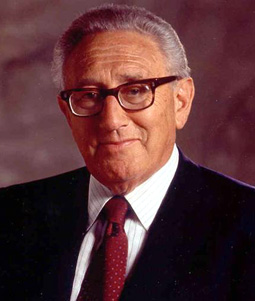
Henry Kissinger
 Next Tuesday January 18, the President of China Hu Jintao will meet with President Obama in the White House for meeting amid pomp and pageantry. To set the stage for this important meeting I have collected a few articles that offer both caution and measured hope followed by sage advice from the dean of American diplomats, Henry Kissinger.

First the caution in the form of this article from the Economist profiling China's new attitude that they find dangerous and counterproductive to both China and the world.
WHAT has happened to the “harmonious world” that China’s president, Hu Jintao, once championed? Where is the charm offensive that was meant to underpin it? Recent revelations about its military programmes are the latest Chinese moves to have unsettled the world. Strip the charm from Chinese diplomacy and only the offensive is left. Sino-American relations are at their lowest ebb since a Chinese fighter collided with an American EP-3 spyplane a decade ago.

Read more:
Discord

In this companion piece the Economist profiles President Hu's official state visit to Washington next week.
CHINA’S President Hu Jintao arrives in America on January 18th for a welcome at the White House, full of pomp and pageantry, that American presidents seldom lay on even for the closest of friends. After an unusually rocky year in their relations, both China and the United States hope for respite. But mutual wariness is growing, thanks not least to China’s hawkish army.
Read more:
Another go at being friends

For how Americans view China comes these surprising poll results that perhaps reveal more about how little Americans really know about the economic and political tenor of the world. The Wall Street Journal's China Realtime Report filed this about the results of a Pew Research poll about how Americans precieved China's economic standing.
Which country is the world’s leading economic power?
Almost half of Americans (47%) think it’s China, according to a poll by the Pew Research Center for the People & the Press, while only 31% think the United States is still out front.
Game over. No wonder China comes out top in a list of countries representing the “greatest danger” to the U.S., just above North Korea — and well above Iran — in the same poll.
In fact, the U.S. economy is about three times the size of China’s in nominal terms, and its GDP per capita is roughly 10 times bigger. But when it comes to popular perceptions of China in America, those facts apparently don’t matter. Ahead of President Obama’s meeting next week with his Chinese counterpart, Hu Jintao, the one statistic everybody is looking at is the alarming unemployment rate, hovering just below 10%. For China, it’s around 4%.
Americans are worried about jobs, and China is widely perceived as stealing them, through mercantilist trade policies, an undervalued currency and other underhanded methods. The same poll finds that 53% of respondents think the U.S. should get tougher with China.
Missed perceptions can lead to dangerous missteps that end up hurting both countries.

Read more:
47% of Americans See China as No. 1

Finally Henry Kissinger, a voice of masterful reason and vision, scolds elites in both China and the United States for, "emphasizing conflict rather than cooperation." in this January 14th, article from the Washington Post.
Most Chinese I encounter outside of government, and some in government, seem convinced that the United States seeks to contain China and to constrict its rise. American strategic thinkers are calling attention to China's increasing global economic reach and the growing capability of its military forces.

Care must be taken lest both sides analyze themselves into self-fulfilling prophecies. The nature of globalization and the reach of modern technology oblige the United States and China to interact around the world. A Cold War between them would bring about an international choosing of sides, spreading disputes into internal politics of every region at a time when issues such as nuclear proliferation, the environment, energy and climate require a comprehensive global solution.

Conflict is not inherent in a nation's rise. The United States in the 20th century is an example of a state achieving eminence without conflict with the then-dominant countries. Nor was the often-cited German-British conflict inevitable. Thoughtless and provocative policies played a role in transforming European diplomacy into a zero-sum game.

Sino-U.S. relations need not take such a turn. On most contemporary issues, the two countries cooperate adequately; what the two countries lack is an overarching concept for their interaction. During the Cold War, a common adversary supplied the bond. Common concepts have not yet emerged from the multiplicity of new tasks facing a globalized world undergoing political, economic and technological upheaval.
That is not a simple matter. For it implies subordinating national aspirations to a vision of a global order.
Read more of this important article.
Avoiding a U.S.-China cold war

Much of what Kissinger is saying is what geostrategist Thomas PM Barnett has been actively been working toward in cooperation with counterparts in China. There is a common thread of many of the same realities apparent in both Kissinger's article and in the Sino-American Grand Strategy Terms that has been profiled on this blog. Let us hope that over the next week, both Presidents find a way to be visionary, and in the words of Henry Kissinger.
The test of world order is the extent to which the contending can reassure each other. In the American-Chinese relationship, the overriding reality is that neither country will ever be able to dominate the other and that conflict between them would exhaust their societies. Can they find a conceptual framework to express this reality? A concept of a Pacific community could become an organizing principle of the 21st century to avoid the formation of blocs. For this, they need a consultative mechanism that permits the elaboration of common long-term objectives and coordinates the positions of the two countries at international conferences.
The aim should be to create a tradition of respect and cooperation so that the successors of leaders meeting now continue to see it in their interest to build an emerging world order as a joint enterprise.

Wednesday, December 29, 2010

Year End Thoughts

2001-2010

As 2010 closes out, the United States stumbles out of the first decade of the 21st century, burdened with a massive domestic debt load, high unemployment, and the self assumed weight of providing the world with security, as it demands all nations must clone their political systems in our own image or face the consequences of sanctions and veiled threats of regime change. Not a very pretty picture, but this is how we are seen by even the nations whom declare to be our friends.

Over the past months, China has become the more discussed topic on this blog, displacing Iraq and in the big picture even Afghanistan, as we look into the future and how the United States can shore up the leaks, pump out the debt, and re-purpose millions of Americans to be able to compete in an ever expanding global market, all so that our ship of state can meet the shoals and storms in the coming decades.

To help frame a proposal by Thomas Barnett that I have written about here and here I am going to highlight three recent articles by Tom that puts much of this argument in a proper context. The first of these insights is found in this article in Esquire magazine. Barnett a film buff and quite good critic, congers up a scene from Kill Bill as an analogy to introduce what he had dubbed.
The five D's of the dragon's decline from world-beater to world-benefactor: demographics, decrepitude, dependency, defensiveness, and--most disabling of all--democratization.
Read the whole post for the full flavor as to, When China Ruled the World: Or why the "China Century" will be the shortest on record.

Right on the heels of that post comes this observation from Barnett about the, "hollowness that is China's military rise."
Great line from Chinese expert (from China) about the inability of China's defense industry to create good engines being the "heart disease" of the PLA. Why? It's the crux of their inability to create a solid force structure on their own, hence the need to buy so much from Russia (half of the latter's exports in arms).
Read More
the strategic Tells on China's Military Build-up

All this leads to this post that Tom used to close out his blog this year. pinging his comments off  two differing articles from Time and the Washington Post that call into contrast opposing views on China's DF-21D ship killer cruise missile. Barnett pulls no punches and deals his cards with the confidence that belies his keen sense of observation to pick the fly shit out of the pepper to get to the gist of a story.
Nice Mark Thompson post at Time.com (U.S.-Chinese War Games Ratchet Up), where he starts out by noting that now PACOM is claiming the DF-21D is already deployed - as in, the PLAN could take out a USN CV tomorrow.
So what's the deal? WAPO citing experts saying it could be years away from effective deployment and Admiral Willard of PACOM saying the carrier killer is already deployed?

Bit of a discrepancy, huh?
Barnett continues to pick the truth from these two articles by laying out his cards of logic.
Thompson quotes a recent post by me on the CSBA bombing maps and reprints one himself. I ginned up that post because I want people to understand why the Chinese chortle when we say things like, "We have no intention of going to war with you." China parks no carriers off our coast, nor does any wargames up close, nor has any air force bases within strike range. We have all those on China, and we publish war plans in detail saying we'll bomb their entire country and destroy all their shipping and sink all their naval vessels - for starters!
And yeah, that's pretty ballsy - or just plain stupid - when you're in the financial situation we're in. Our military remains - by and large - clueless about the larger economic interdependency we have with China. I mean, they're aware of it, but THEY JUST DON'T GET IT. That lack of understanding, combined with the knuckleheads sprinkled across the upper reaches of the PLA and PLAN, is one dangerous combination, because this is how world orders are destroyed: ambitious people simply doing what they think is their job, and nobody with enough courage or intelligence to rein them in.
I want a strong military, and I'm on too many records to play saying that I want to use it regularly. This isn't about who's "realistic" about the world. This is about who understands the place of war in the modern era and who still wants to keep it an isolated plaything - no matter the cost or consequences.
Dangerous stuff.
This post is well worth reading in it's entire form. The final paragraph is all too revealing as to how we have allowed the hubris, accumulated after over a half century of global domination, to color our perception of leadership.

We are killing our own global leadership with such hyperbole and fear-mongering, and we deserve to taken down a peg or two in global power fora if we don't improve (already happening). Our great genius in creating this globalization is that ultimately, it does not need us to continue. It only needs our unwillingness to destroy it.
And now, even that basic intelligence is being brought into question.
Read the whole post
Time on Pacom Versus WaPo on PRCS-DF-21D

As you peruse these articles, take the time to consider all the sides. Are we in some global struggle against a despotic regime bent on imposing a Nazi national socialist or Communist society on the world? Or are we just afraid of the future and the billions of empowered people from across the planet whom now desire and can see the chance to live a sliver of the lives that most Americans have enjoyed for half a century? As a nation we started this process by being the first nation to make it possible where even the very poor had an opportunity to better themselves. We continued this process after World War II when we set up a rules based order that allowed any nation to grow and improve. That generous attitude has sustained us for all of our history. Dare we look at ourselves now and begin to see that we are turning into a cynical ordinary country, and away from the principled nation of our grandfathers.

Sunday, December 19, 2010

An Unsettled Christmas Week

Global Travel Time map


On the weekend before Christmas and as the first decade of the 21st century comes to an end, the world finds itself bracing for change that is described in a post at Yale Global Online. Jeffrey E. Garten, the Juan Trippe professor of international trade and finance at the Yale School of Management writes this about the crumbling of the current global economic order and what changes need to be confronted and embraced to avoid the world spinning backwards as self centered countries resist the changes wrought by their own miss-managed policies.
As the first decade of the 21st century comes to a close, leaving the steady growth of last century's second half a distant memory, what does the future hold for the global economy? For the next several years, we can expect exceptional turbulence as the waning days of the global economic order we have known plays out chaotically, possibly destructively. For the longer term, say, 10 years from now, a more promising picture awaits as a new set of international economic arrangements gains support from governments, business and civil society, and as a wave of exceptional innovation bears fruit. The transition will be a treacherous ride that no government would rationally choose to take. Yet the die seems cast.
Garten goes on to point out that the United States is no longer in position to shoulder all the burdens of maintaining global order.
The old order had to die also because the United States – its creator, rule enforcer, market of last resort and chief cheerleader, now racked by deficits, debts, and a polarized and inward-looking political system – can no longer shoulder the burden of these roles. No one country is remotely capable of replacing America, and effective collective leadership is nowhere in sight.
Garten hold out hope that new leadership in the next decade will appear with visionary ideas to engage the world in the next stage of global governance, not global government.
Some hope for optimism lays in the possibility that by the end of this decade, many domestic hurdles, such as US fiscal problems and European debt pressures, will be on a sounder trajectory. Also, by then, a new generation of leadership could emerge, weary of failed policies of the previous 10 years and much wiser for it. These men and women are likely to be willing to move ahead with the many new ideas that are sure to evolve during a period of chaos and instability.
....Never in world history has there been such capacity to link new ideas, great talent and huge pools of money in support of progress. Nor should we forget that some of the trends now emerging, such as the hyper-urbanization of the planet, could produce unprecedented innovations in energy, transport, health care and more as the creativity produced by urban clusters is unleashed....


Read the whole post.
Brace for Change as the Global Economic Order Crumbles


A worker hoists an American flag alongside a Chinese flag in Tiananmen Square

As one ponders the changes noted above, we turn to a possible remedy for lessening the tensions brought by trying to maintain global order and overcome the ghosts of Cold War images that still haunt and inhabit the minds of many within the borders of old adversaries.

Thomas PM Barnett, author and geostrategist, recently returned from spending two weeks in China where he and his counterparts discussed a proposal for what is described as a Sino-American grand strategy "term sheet" that proposes an executive agreement between the United States and China for peaceful co-existence and an economically balanced relationship. The plan, linked below, is open for discussion now that it had become public. How it is received will be the fodder of debate within the confines of both the halls of Congress, the White House and across the charged airways of American broadcasters as well as every balanced and unbalanced blogosphere voice all rising in a crescendo of background noise that may threaten the very prospect of wise debate. I for one see  the merit of this proposal in removing the burrs of inter-continental security concerns as well as more importantly, improving economic inter-dependency which is what much of the lead post by Jeffery Garten is all about. Grab a cup of coffee, and read over the proposal below. Don't toss the whole idea away when reaching parts that might stick in your craw. Let it sit a while and ponder it long and hard before making up your mind.

Read the whole plan.
Final Version of the Sino-American Grand Strategy Terms


U.S. Army troops celebrate Christmas during Korean War

There is one major caveat to this plan that remains poised to send the best laid plans for cooperation crashing to the ground. That comes as the world hold its breath as the two Korea's step to the brink of war this weekend. South Korea, under domestic pressure to stand up to North Korea is going ahead with plans for live fire drills. As fellow blogger extraordinaire Galhran points out, cancellation is not an option. The culture of face will not allow the President of South Korea to back down in the face of North Korean threats. So, here is what might happen as told by Galhran.

The weather is improving over South Korea, and the live fire drills are likely to take place today. A few random thoughts before the day unfolds.
South Korea will conduct the live fire drills, cancellation isn't an option. This is a cultural issue as much as anything, South Korean President Lee Myung-bak cannot back down to North Korean threats or intimidation or he will be forced to resign in disgrace.
North Korea will return fire. The North has made every single warning that is consistent with the warnings made prior to the last outbreak of combat, including phone calls with personal warnings (very rare). Expect return fire to YeonpyeongGyeonggi Province. If you recall, that is where intelligence suggested the next attack would come from, and if I was in Vegas I would bet that is where KPA Unit 2670 is located.
Galhran goes on to ponder the South Korean response. However, buried within one of  the links, is this troubling possibility.
Military officials say North Korea’s long-range guns could launch up to 17,000 shells at the greater Seoul area in an hour. If this were to happen, they say some 3.25 million civilians and soldiers could be killed or wounded.
The military, however, does not believe this many casualties would result. This is because the 3.25 million number is based on two unrealistic premises: that South Korea and the United States could not detect signs of an impending North Korean long-range artillery attack, and that North Korea’s long-range guns would continue to fire for an hour without taking any losses.
A military source said, “Of the 170 rounds fired at Yeonpyeong Island, about 90 landed in the sea, and of the 80 rounds that hit Yeonpyeong Island, 20 were duds, so of the 170 rounds fired, only about 60 were effective.”
Well do the math, that means if only 35% of the shells were effective, it would then lower the possible South Korean losses to only 1.13 million dead and wounded. Even those kind of causalities could push South Korea to launch an all out response. Where that would lead, is for only time to tell. One thing would be obvious. Any accord such as linked above, would be forever gone, as the hawks on both sides circle the wagons and begin the blame game. So folks as the week dedicated to peace and brotherhood toward mankind opens; the world wonders and waits with all eyes pointed to what was know as the Hermit Kingdom, now divided these past 60 years.

Read more:
Guns of Christmas

Sunday, December 12, 2010

HG's Anatomy of a Dragon

Chinese Dragon

Dragon Anatomy

The past couple of weeks I have been writing about Thomas Barnett's proposal for a bilateral plan that tries to eliminate the troublesome burrs and sharp thorns in the relationship between the United States and China; that history tells us has led to conflict in almost every case when two powers begin vying for economic dominance. I have been floating this proposal past a few of the astute minds I know, and have gotten a mixed bag of responses, ranging from guarded hope, to it will never lead to the kind of relationship we had with Great Britain. Nobody sees an open conflict since the old mutually assured destruction narrative looms over any nuclear armed power going to the mat. The best course of action at this time is let the idea percolate until it has had a chance to be tasted by the powers on both sides of the Pacific.

Gray's Anatomy

Part of understanding another country is knowing them from the inside. So taking my title and theme from Gray's Anatomy I will take a brief look at some of the major organs in the Sino-Dragon's body.

First of is the heart. in this case the heart of China is represented here in a new book Heart of Buddha, Heart of China by James Carter, Professor of History at Saint Joseph's University, in Philadelphia.

An excerpt of this work appeared on The China Beat: Blogging how East is Read and captures the essence of China's heart today.
The China of today, with its towering skyscrapers, high-speed trains and seemingly limitless economic potential, at first appears totally divorced from Tanxu’s world of ghosts and visions. As I retraced Tanxu’s steps, though, I found that the issues confronting China today are not so different from those that Tanxu observed one hundred years ago. Tanxu saw a weak and divided China, struggling to survive in the face of foreign invasion and internal division. Today, China is poised to be a world power, but the projection of strength disguises internal weakness. Dramatic changes to its economy, society, and culture threaten domestic stability, as coastal provinces develop rapidly but interior regions lag behind. In the past, Japanese invasions, European colonialism, and rural uprisings threatened social cohesion; today the threats are a frayed social safety net, masses of migrant workers, regional and ethnic tensions, and environmental degradation on an unprecedented scale. Now, as then, many Chinese find themselves wondering about their nation’s identity and future.

Read the whole excerpt
Heart of Buddha, Heart of China

Next we look at the gut of China, a visceral area best represented by the 1.4 billion souls whom claim heir to the middle kingdom's legacy. As noted, thirty short years ago 65% of the Chinese people were desperately poor, living on less than $1 per day. Today, that number has shrunk to single digits. Alongside that remarkable achievement came an effort to increase the number of college graduates to match the needs of an exploding economy. This next article looks at what happens when success in one area has led to growing pains as severe as any gastric cramp or gall stone.
....In 1998, when Jiang Zemin, then the president, announced plans to bolster higher education, Chinese universities and colleges produced 830,000 graduates a year. Last May, that number was more than six million and rising.
It is a remarkable achievement, yet for a government fixated on stability such figures are also a cause for concern. The economy, despite its robust growth, does not generate enough good professional jobs to absorb the influx of highly educated young adults. And many of them bear the inflated expectations of their parents, who emptied their bank accounts to buy them the good life that a higher education is presumed to guarantee.
“College essentially provided them with nothing,” said Zhang Ming, a political scientist and vocal critic of China’s education system. “For many young graduates, it’s all about survival. If there was ever an economic crisis, they could be a source of instability.”
Read the whole article to get an idea that having a degree in a country that has an excess in the millions, is no road to prosperity. The accounts of some of the estimated 100,000 college graduates living in conditions that almost rival their grandparents is sobering.

Read more:
China’s Army of Graduates Struggles for Jobs

No anatomical study would be complete without an examination of the brain. Our example is reflected in measuring how mature the Dragon's brain is in making decisions that reflect a mature country, or one still trying to find their tongue after being in a centuries long coma.

The remarkable crew over at Small Wars Journal, host Robert Haddick and the This Week at War column. Haddick presents evidence that China is still not the polished mature voice one would expect of a great power who spoke with the tone of self assurance and wisdom. This example is but several highlighting China's ham-handed diplomatic efforts.
On Dec. 6, the Washington Post's John Pomfret described Beijing's clumsy approach to South Korea in the wake of the North's hour-long artillery bombardment of Yeonpyeong Island. Four days after the attack, China sent State Councilor Dai Bingguo to Seoul, without an invitation or advanced notice. Upon landing, Dai demanded that South Korean President Lee Myung-bak abandon his schedule for the rest of the day in order to meet with him, which Lee refused to do. When the two met the following day, Dai told Lee to "calm down" and then delivered a history lecture on China-South Korean relations.
Dai's diplomatic bungling was startling. After his departure, Lee and his new defense minister adopted a policy of military retaliation against the North. Lee then sent his foreign minister to a policy coordination meeting with his U.S. and Japanese counterparts. The United States proceeded with large military training exercises with South Korea and Japan. Soon after that, the U.S. and South Korean governments unveiled a completed free-trade agreement. China's actions regarding North Korea have done wonders to bring together the United States and its Asian allies.
And this diplomatic brain fart, was revealed by Wikileaks.
China's self-inflicted diplomatic damage over North Korea now even extends to the Persian Gulf. According to a 2007 U.S. diplomatic cable revealed by WikiLeaks, the U.S. government requested that China stop a shipment of ballistic missile parts from North Korea to Iran that passed through Beijing. It is likely that the shipment identified in this cable was just one of many from North Korea that have passed through China on their way to Iran. Such shipments are in violation of U.N. Security Council resolutions targeting North Korea's weapons proliferation activities.
Read more:
This Week at War: China's North Korean Folly

I hope this little anatomy class has helped to understand what has been perceived as a dragon of such size and potential strength that history should quake with angst. But after one looks inside they see that the dragon is prone to ailments that prevent it from reaching it's full potential until they are cured.

Sunday, December 5, 2010

How Will Two Goliaths Meet?


This past couple of weeks I have been following the progress of Thomas Barnett's ongoing effort to find a starting point for better relations with China. As noted in earlier posts here and here, Barnett in concert with the Center for America China Partnership are meeting over the next ten days with leading Chinese policy experts to discuss a grand strategy proposal for a bilateral and multilateral agreement between the United States and China. Several of the proposals ask that the United States rethink it's position in a definitive Geo-political way. Many of  the proposals on surface will give Americans pause, because it goes against what has been part of our national policy for the past half century. Is Barnett, as some have inferred, a "Panda Hugger" or is he being truly visionary? The answer for me lies in carefully reading history and thinking about both China's history and ingrained philosophy as well as the history and philosophy of the United States. Blog friend Mark of Zenpundit posted on this subject and got a variety of comments, some negative and sceptical that tend to reflect the perceived American image of China. 

Today our national creed has become to spread American style democracy around the globe, even to the point of a gun. The results have backfired in several places as nationalistic tendencies led to the election of leaders now bent on confronting our hegemony by inciting disdain for all things American. We should all be reminded of America's first foray into imperilism cum, "nation building" in 1900, which saw the Philippines racked with a war of resistance that cost thousands of American and Philippine lives and ended in the United States tarnishing it's image of being the shinning hope for the down-trodden. Ultimately we left behind a country still struggling to make it's way beyond the grinding poverty that still resides on many of their far flung islands.

Many Americans still see the rise of China in Cold War terms. China is continually referred to as Communist or the Chi-Coms who are still bent on changing the world into a collective farm and concrete block apartments of robotic people dressed in  drab Mao jackets and riding bicycles in mass transit to equally drab work assignments. For anyone who has visited China, you will quickly learn that image has joined Chairman Mao in his tomb. Mao jackets along side Russian style fur caps are sold only to tourists by hundreds of vendors, all eager to gain a middle class existence. This is aptly apparent when one considers that just a short thirty years ago, over 65% of the Chinese people lived in extreme poverty on less than $1 per day, but by 2007 it had fallen to 4%. Today, it is even lower, but still far behind our American standard of living. Bottom line, they accomplished this by emulating the best traditions of liberal Capitalism, not Communism. If anything, China is returning to her roots, as the Communist Party assumes the role traditionally held by the Mandarin class who administered policy for the imperial court. We may not like it, but with the growing nationalist pride many Chinese feel, seeing them elect a firebrand who becomes bent on starting wars is not in any one's best interest at this time. So in the short run it is better to allow them to progress towards a popularly elected representative government at their own pace.


China's String of Pearls

Other voices are calling out for similar approaches besides Barnett and his Chinese based counterparts John Milligan-Whyte and Dai Min. Intrepid author of a dozen books on geo-politics of our world Robert D Kaplan in his recent best seller Monsoon: The Indian Ocean and the Future of American Power, writes about American and Chinese cooperation in maritime matters. He concludes that.
"...I said that strong American-Chinese bilateral relations going forward are not only plausible but might be the best-case scenario for the global system in the twenty-first century, allowing for true world global governance to take shape."
One of the links in a previous posts had the following analogy by Kishore Mahbubani.
The world has changed fundamentally. Humanity hasn’t. Or, to put it more accurately, humanity has not changed its organizing principles to deal with a changed world. A simple metaphor demonstrates how fundamentally our world has changed. Before the contemporary era of rapid globalization, when humanity lived in 192 separate countries, it was like living in 192 separate boats. Hence, all the world needed was rules to prevent collisions. The 1945 rules-based order did just this, while also allowing for some cooperation. Today, as a result of a shrunken world, humanity no longer lives on 192 separate boats. Instead, all 7 billion of us live in 192 separate cabins on the same boat.
And though we live on the same boat, we have no captain or crew to manage the boat.
None of us would dream of sailing out to sea on a boat without captain or crew. Yet, this is precisely what humanity is doing with Earth as we sail into the 21st century. Global problems require coordinated global actions to solve them: from financial crises to global warming, from pandemics to global terrorism. Yet, despite this, we shy from creating institutions and processes of global governance. Note, global governance is not global government. Despite this crucial distinction, no national government dares to espouse greater global governance.


Now look at this editorial by Robert D Kaplan in the December 5, 2010 Washington Post.
Currency wars. Terrorist attacks. Military conflicts. Rogue regimes pursuing nuclear weapons. Collapsing states. And now, massive leaks of secret documents. What is the cause of such turbulence? The absence of empire. ¶ During the Cold War, the world was divided between the Soviet and U.S. imperial systems. The Soviet imperium - heir to Kievan Rus, medieval Muscovy and the Romanov dynasty - covered Eastern Europe, the Caucasus and Central Asia and propped up regimes in Africa, the Middle East and Latin America. The American imperium - heir to maritime Venice and Great Britain - also propped up allies, particularly in Western Europe and East Asia. True to the garrison tradition of imperial Rome, Washington kept bases in West Germany, Turkey, South Korea and Japan, virtually surrounding the Soviet Union.
The breakup of the Soviet empire, though it caused euphoria in the West and led to freedom in Central Europe, also sparked ethnic conflicts in the Balkans and the Caucasus that cost hundreds of thousands of lives and created millions of refugees. (In Tajikistan alone, more than 50,000 people were killed in a civil war that barely registered in the U.S. media in the 1990s.)
The Soviet collapse also unleashed economic and social chaos in Russia itself, as well as the further unmooring of the Middle East. It was no accident that Iraqi President Saddam Hussein invaded Kuwait less than a year after the Berlin Wall fell, just as it is inconceivable that the United States would have invaded Iraq if the Soviet Union, a staunch patron of Baghdad, still existed in 2003. And had the Soviet empire not fallen apart or ignominiously withdrawn from Afghanistan, Osama bin Laden never would have taken refuge there and the attacks of Sept. 11, 2001, might not have happened. Such are the wages of imperial collapse.
Now the other pillar of the relative peace of the Cold War, the United States, is slipping, while new powers such as China and India remain unready and unwilling to fill the void. There will be no sudden breakdown on our part, as the United States, unlike the Soviet Union, is sturdily maintained by economic and political freedom. Rather, America's ability to bring a modicum of order to the world is simply fading in slow motion.

Read the whole article for Kaplan's razor sharp insight.
A world with no one in charge 

I will continue to write about this evolving process. The reality is that time is not standing still. The United States casts about seeking leadership that at times appear to the people in the developing economies as selfish as the infamous robber barons when they rail on about losing jobs overseas, as their children scorn school and many of their elders lobby for entitlements in the form of rich pensions and ever increasing government programs. Beyond the questions posed by forging bilateral relations, how do we as a nation re-discover our own national myth of greatness and opportunity amid the anguish caused by generations of indoctrinated navel gazing about our frailties and injustices. Kishore Mahbubani, Robert Kaplan and Tom Barnett all agree, the world is no longer made up of individual boats, but now if you will we are on a huge ark, with the survival of humanity at stake as in antiquities tale.

Wednesday, November 17, 2010

China on My Mind


China has and will always be on my mind, and since I met my wife, in my heart. That said, I am not an apologist for their current or past system of government and in fact find it counter to what I believe in; and in my youth fought mortally against. This week a few of the blogs I follow have had an exceptionally rich number of posts, seeking to counsel, warn, and decipher our current and future relations with the mystical dragon that is economically breathing down our necks as it approaches our status as the worlds strongest economy from behind.

Thomas Barnett has been in the forefront of counseling that we need to manage China's rise much like Great Britain shepherded the rise of the United States as a great power in the early 20th century. Barnett has written over 200 posts this year that are tagged about China. This week was no exception and this quartet of posts lays out more sensible ideas for how we should respond to what in reality is the return of China to the world stage as a great power, a position she held for most of her 5000 year history.

First is this piece with tips about how to blunt and put the brakes on demonizing China here at home.
Trying to Unwind this Demonization Trend

Tom follows that post with this post and link to his World Politics Review column, with the viral video of the now famous Chinese Professor.
Using China to Scare Ourselves Straight

Then this about how demographics are going to change  the world, once again!
Globalization's Massive Demographic Bet

Tom then looks at the FDI or Foreign Direct Investments over the past century.

Fascinating really: you can see the decline of the British empire, then the US stepping in to fund so much of the world post-WWII, and then our own progressive decline as the rest of the West recovered, then Japan rose (and fell), and now China rises. Naturally, some will wish to make the comparison of the decline of the US "empire" with that of the Brits', but our system was never set up to maintain dominance. It was set up to encourage the rise of others peacefully, which it's done (65 years of no great power war and counting, the biggest increase in human wealth/income ever seen, billions avoid poverty). The world simply couldn't handle the rise of great powers--until we came along and forced a system that could. It is, without doubt, the greatest accomplishment of any great power in human history.
Read more:
Strange Days

On the heels of this, comes a second broadside of common-sense fired directly at the leadership in Washington. Here is just of taste of what is coming.

Our definition of a "responsible stakeholder" is "do everything the way I want it and THEN you can be my friend!" That's not how you treat an ally; that's how you treat a dog. If we have FDR today, he'd deal and he'd deal with confidence. That guy believed in his system, and had no fears dealing with authoritarian regimes. But we don't have any FDRs today. Reagan and Clinton were the last, it seems: guys who knew how to cut deals, compromise, move the ball--with confidence in their country and its future. Now we have such little people with little minds (yeah, Bloomberg said it and I repeat it!). We bluster and we strut and we're being ignored more and more--a trend I trace back to the beginning of W's 2nd term (Katrina proves we can't nation-build abroad or at home).


UPDATE: STRANGE DAYS (UPDATE)

Coming on the heels of Barnett's posts comes this brief post by Robert Farley at Information Dissemination who discusses what he correctly labels a fractured Chinese foreign policy.

China is full of many people who want many different things. Like the U.S. national security apparatus, the Chinese government harbors a plethora of different foreign-policy perspectives, some focused on trade, others on power, and still others guided by domestic political concerns. Moreover, the Chinese government is no longer the only actor of consequence in China. Chinese public opinion increasingly constrains policymakers, and can even force them into action they don't want to take. Like all states, China is fractured. Recognizing its fractured nature is the key to developing an effective U.S. policy toward China's rise.
Don't miss the links to Robert's column at WPR, and the very interesting Stockholm International Peace Research Institute (SIPRI report about China.

Read More.
Fractured China

Now where is this all going? Most might think that Robert and Tom's posts are preaching to the choir of their readers and will have little impact on those counting on tapping into the national malaise of anger and self doubt that in part came from our own drunken binge on the scent of cheap money and easy credit terms along with feeding at the trough of feeling our oats for the past half century.

We need a wake up call, but more importantly we need leadership that is visionary in the vein of a Roosevelt or a Lincoln whom front loaded the next quarter century of economic growth for America while in the depths of  war. Lincoln in his five important bills during the 33rd Congress, and Roosevelt in holding Churchill's feet to the fire about shedding their colonies after the war and then taking the leadership role in conducting the war at Tehran in 1943. We continue to suffer from mediocrity and men blinded by hubris and measures of implanted self-destructive genes.

Recently I have been reading two books as mentioned in a previous post . The thread of what would happen when we insist on a hasty and blind charge towards one man one vote democracy in countries with massive iniquities. Think what would happen in China if the people all could have an equal say in their policy while most of the country is barely out of grinding poverty. They would be mailable to someone who could seize the moment and their new found nationalism in what is dubbed by the Chinese leaders as Netizens who by far display extreme nationalist tendencies that mirror the worst of mid-20th century Germany and Japan. We only have to look south to view Venezuela and how Hugo Chavez has harness the poor to vote him president for life and start down the road of creating an almost fascist state, ditto Bolivia and over the horizon, watch for Ortega in Nicaragua. Honduras just stopped short of allowing their president Zavala to proceed down that path.

If we play our diplomatic cards right we can see a peaceful rise of China that operates in a capitalist system with Chinese characters and is a partner in developing and spreading the system of free market and capitalism that sprang from the fountain of hope and opportunity called the United States.

Finally, to share a small story about China. My mother and father in-law lived through the worst of the Cultural Revolution and being professors of foreign languages were sent out to the fields as punishment and re-education. They don't speak of it and I only recently learned how badly my father-in-law's health was broken during that time. Quietly as the worst passed, they raised their two daughters to learn foreign languages and as soon as possible, encouraged them to leave, one to Germany and the other to America. Today, they live the quiet lives of the retired, but knowing what they must have endured and then finding a way to re-purpose themselves and go on and remain proud of their nation for it's long endurance and heritage gives me pause to reflect on their strength of character. And also, their wisdom to not want to see their daughters and grandchildren fall victim to the same spasms of what happens when the citizens run amok.

Wednesday, September 29, 2010

HUMMMMMP DAY READS

Boston Tea Party
American Leadership

Today the recommended reads are few, but rich in content. First off, blog-friend Lexington Green, the nom de guerre of a rather brilliant barrister who hails from the windy city has in the words of the zenpundit made the big time ever since he penned a piece about the Tea Party and gained the attention of the likes of the MSM, Glen Beck and Rush Limbaugh. Lex, has an article on the rightnetwork and begins with this about insurgency.
Mass political movements often begin with a single, striking event. The Insurgency began in the fall of 2008, when President Bush, Senator Obama, and Senator McCain appeared together to endorse the TARP bailout. At that moment the lights came on for many Americans. It was glaringly obvious that both political parties jointly operated the system, and the system existed to protect the well connected at the expense of everyone else. The public opposed the TARP bailouts; the banks got their money anyway. The Insurgency, long brewing, began.
The Insurgency is a movement of citizens directed against unsustainable government taxation and regulation, and spending, both of which benefit insiders rather than ordinary people. The target of the Insurgency is a leviathan in Washington, D.C. that will ruin us all if it is not dismantled.
The Insurgency is part of a long tradition of mass political movements in our history. It has the potential to make a fundamental change in American life-for the better.
Read more:
Enter Stage Right

These next recommended reads, come from two gentlemen who have dialed back on the blog posts and in return, are turning out what I deem extremely high quality observations and analysis.

Iranian Flying Boats


Galhran the master of Information Dissemination  has fired off a salvo on naval gunnery. Granted in the missile age, this seems out of touch, but wait until you read both articles then decide. Is a return to ships bristling with automatic crew served weapons, a nod to the last ditch defence against Kamikazes in the last months of the Pacific War?

It is very easy to look at this technology and be dismissive... but that our weakness isn't it? We are a technology society and look at the specifics of technology to form the basis for our judgments. It a technology doesn't conform to our conceptual expectations regarding capability, then 'it doesn't pass the smell test' and is usually dismissed with sarcasm. I expect there is plenty of sarcasm to be easy shared upon examination of this little piece of tech being fielded by Iran.

Read more:
The Swarm

Twin Ma-Duces

In this post about a recent gunfight, Galhran writes.
In the missile age, it is noteworthy that with the exception of a single torpedo attack - we continue to see a series of gunfights of various natures define military combat at sea. Navy Times reported yesterday that just two weeks ago, the US Coast Guard engaged in one such firefight.
Read more:
Peacemaking: The High Seas Gunfight


Mumbai, 2008

Next?

And finally, today's news has been abuzz about the reported terror plot to launch Mumbai style attacks across Europe. Thomas Barnett, dialed back the volume of posts on his must read blog, and is now posting when he feels the need to provide an indepth review of major stories and trends. Barnett's analysis of the terror plot and how we handle the next one, makes this a spot-on piece to read and ponder. Tom begins by answering:

Why it's important to pay attention:
■It's long been my contention that extremists operating in NW Pakistan, most likely in some collusion with al Qaeda (not a big leap), will keep trying to make some big splashy strike in the West. Many experts saw the Times Square bombing attempt as a practice run using an expendable. Figuring how hard that is to pull off--in a relative sense, and with AQ and its net falling from our collective memory thanks to the economy, the default alternative for such groups to regrab the headlines is to do something easy and cheap like Mumbai II and to do it in Europe. So yeah, I find this whole logic believable. 
And I give you this his final thoughts with the link to read more.
Then tack on Obama's statement to Woodward that "We need to make clear to people that the cancer is in Pakistan."  I guarantee you, the next scheduled-by-our-enemies response (when the drones aren't enough) will induce a serious calibration effort/opportunity with both China and India.

Read more:
Report: NATO members foil Mumbai-style wave of attacks on Europe


The common thread I found in all of these articles is the call for leadership; real inspired visionary leadership, like the kind that got us through crisis’s in the past. Lex, Galhran, and Tom are pointing out that amid all those layers of rhetoric and micro management of the current and recent administrations, that as a free people, we are collectively waiting for an unnamed and unseen leader who can provide the essence of visionary leadership the has served the world before.