Showing posts with label U.S. History. Show all posts

Sunday, June 10, 2012

This week, the "Transit of the USS Iowa", matched the "Transit of Venus", for a once in a lifetime event

USS Iowa's Transit to Home
Iowa, courtesy of Port of LA photo
This week saw two events take place that will only happen once in the lifetime of living humans. One, a celestial event where the planet Venus transited across the face of the Sun and except for the media sending images around the planet, would have passed unnoticed by most of humanity. The other great event, was visible. It was the transit of the USS Iowa, the last battleship to taste the open sea as she was moved down the main channel of the Port of Los Angeles to her permanent berth, where she will assume a new mission of being a living museum and education center, serving the people of Los Angeles and the millions of future citizens who will walk her decks to learn of the great naval heritage of America. Thousands lined the main channel, and millions more, were treated to viewing the transit on their evening news reports, as dozens of reporters, supported by a half score of helicopters hovering overhead, filming every meter of the Iowa's passage.

I cannot emphasis enough, the impact seeing this great ship come up the main channel meant for those of us who know the history of the United States Navy's birth from Six Frigates, to grow into the global force we field today. This force has matured with the nation, and today, is being called upon to resume their place as the prime strategic asset, as well as "A global force for good."  Ships like the Iowa, over their lifetime rarely fired their guns in anger, but as the ship's nickname "Big Stick" implies, allowed the United States to not only speak softly; but caused nations less inclined, to become silent, and listen to our message about guaranteeing freedom of the seas, and fair trade, as well as goodwill to all nations who have joined in a partnership that has seen the world move from countless millenniums of grinding poverty, to one where half the people on the planet have achieved middle class.

LA Maritime Museum

I was fortunate to view the passage from the fantail of the LA Maritime Museum's Angels Gate Tugboat where the complement reflected the diversity and interest of the community. As this  little group waited to watch the passage of the Iowa, the stories of why people turned out added to the tapestry of what the Iowa symbolized to those standing along the shore. One lady explained that she was there because her father had worked repairing Navy ships in the Bethlehem Steel shipyard in San Pedro for 40 years, only taking off two weeks in that entire time. Her father had passed, but she was their to pay tribute to the Iowa and honor her father's legacy. Hundreds of old sailors some barely able to walk, became silent, and stood at crisp attention and held their salutes as the ship's colors passed. One young man in the company of his parents, was decked out in a USS Iowa tee shirt and hat. His parents in casual conversation related how much their teenage son was interested in naval history and had actually toured the USS Missouri in Hawaii four times. My history professor genes kicked in, and we began to talk naval history, where upon this young man's knowledge was remarkable including knowing about Alfred Thayer Mahan, and how the two President Roosevelt's had been so instrumental in building the US Navy into a global force and ushering in our great power status. The young man's parents learning I was a great supporter of the Pacific Battleship Center wanted to know how their son could become involved as a volunteer. They were pleased to learn that the battleship would have both a education program as well as an overnight element to allow young people to experience the legacy of our maritime heritage.

Port of LA photo

Over the next few weeks as the Iowa prepares to open, hundreds of hands will be lent to put on the final touches before she opens July 7, 2012. I have noted it before, but cannot repeat it enough to publicly acknowledge a few people who brought the Iowa to life.

Trish Place and Robert Kent, PBC
Bryan Moss, USS Iowa veteran

This story began when Robert Kent as a young student, was in a library and book about battleships caught his eye. That chance encounter fostered a lifelong love affair with these great ships. Later, in the middle of a successful business career, Robert did what many do when they want to follow a dream. He changed careers, and founded an organization to help preserve these great ships.

The story of how the Iowa came to San Pedro, really started when a former Iowa crew member who had served on the Iowa during the Korean War, Bryan Moss, approached Robert, and proposed that the Pacific Battleship Center go after the Iowa and bring her to San Pedro. Over the next two years, Robert organized, planned, and promoted the idea to turn the Iowa into a dream he had nurtured for decades. That dream was to open a living ship museum  that would tell the story of these great ships in a way never before done. It is impossible to name the many people who supported Robert and the PBC, in this endeavour. But one stands out, his fiancee Trish Place has been the unsung hero who has been Robert's unwavering supporter, helper, and soon to be life partner.  In the beginning, Trish was the go-to person for all interest and questions, and today, symbolizes what loyalty and love can do. To Bryan, Robert and Trish, we who love this country, and the legacy that being a maritime nation has wrought; will be forever grateful for your intrepid pursuit of the dream to bring the Iowa to life.

UPDATE: Video of The transit of the USS Iowa courtesy of Joe Buscaino, LA City Councilman

Monday, May 23, 2011

Post Rapture Reads

Santa Muerte cult in Mexico

Yangtze River Traffic
from All Roads Lead to China

Now that civilization has weathered the rantings of a 89 year old wanta-be Moses, it is time to turn to more earthly issues, like economics, trade, the threats to our security. Let's get right to it by giving top billing to this post coming from the zenpundit where this next post should make anyone on our southern border pause to look at what in happening to our southern neighbor Mexico.

Mark the blogmeister at Zen introduces the post thus.
SWJ has been en fuego the last few days and this is the first of several that I recommend that readers give close attention.
Dr. Robert J. Bunker and Lt. John Sulivan are indicating that the canary in the coal mine phase of Mexico’s narco-insurgency has passed. Mexican society is entering a new and more dangerous period of accelerating cultural devolution. Nacro-insurgent violence has shifted from the economically motivated and brutally instrumental of organized crime syndicates everywhere to culturally totemic and ghastly ceremonials out of tribal prehistory:
Mark's excerpt from the linked post
…Our impression is that what is now taking place in Mexico has for some time gone way beyond secular and criminal (economic) activities as defined by traditional organized crime studies.3 In fact, the intensity of change may indeed be increasing. Not only have de facto political elements come to the fore-i.e., when a cartel takes over an entire city or town, they have no choice but to take over political functions formerly administered by the local government- but social (narcocultura) and religious/spiritual (narcocultos) characteristics are now making themselves more pronounced. What we are likely witnessing is Mexican society starting to not only unravel but to go to war with itself. The bonds and relationships that hold that society together are fraying, unraveling, and, in some instances, the polarity is reversing itself with trust being replaced by mistrust and suspicion. Traditional Mexican values and competing criminal value systems are engaged in a brutal contest over the ?hearts, minds, and souls‘ of its citizens in a street-by-street, block-by-block, and city-by-city war over the future social and political organization of Mexico.
Read more"
Skulls & Human Sacrifice: Bunker and Sullivan on Societal Warfare at SWJ


New city on the Yangtze

Turning to look across the broad Pacific at developments in China are these two posts. First a look at the famous Yangtze River and the exploding economic activity along it's winding course. This report comes from the blog, All Roads Lead to China where the author just returned from a four day trip up the Yangtze.
While relaxing on my recent trip up middle reaches of the Yangtze, I took an opportunity to capture some of the Yangtze’s economic activities. To be honest, while I have been to a number of the ports along the lower reaches, and I have seen plenty of economic booms in my time in China, what I saw on the Yangtze was fascinating .. and at times downright scary.

The post goes on the sketch the new cities and shipping with some random observations.
Economic Activity on The Yangtze

And this from global strategist Thomas PM Barnett on China getting old before she gets rich.
China’s latest census revealed a number of accelerating demographic trends, almost all of which reflect the nation’s three-decades effort to limit population growth under the one-child policy.  Elders now make up 13 percent of the population, up from 10 percent just a decade ago. Meanwhile, the number of under-14 youth declined from 23 percent to 16 percent, signaling a steep drop-off in new labor entering the marketplace.
Read and listen:
Latest Census in China Triggers Fears of Demographic Decline

Finally, this last read is worthy because it is from a retired Army officer who sees the wisdom and logic first posed by Alfred Thayer Mahan a century ago regarding control of the sea lanes to ensure a nation's security and greatness. David S. Pierson penned this essay with a provocative title, Bringing the Hurricane: The American Way of War. Published at The Small Wars Journal.
Over five years have passed since Hurricane Katrina came ashore in the Gulf Coast region and the United States is still recovering from the effects of that storm. In a matter of hours Katrina knocked out power and phone systems, destroyed levees, flooded vast areas of land, destroyed almost 300,000 homes, killed over 1500 people and even changed the political landscape of the United States. For every 20 minutes that Katrina pounded the Gulf States, it produced energy equivalent to a 10-megaton nuclear bomb exploding. Imagine if a nation had the ability to drop a storm of such destructive power on its enemies – not a nuclear storm, but a storm of enormous magnitude. Could that nation influence their enemies’ actions and behavior by using such power or even just threatening to use it? While we can’t control the weather, the United States easily possesses the ability to produce similar effects of such a storm. The effects of a storm are widespread, sometimes arbitrary, and not at all surgical in their focus. Such effects run counter to the restrained and measured operations in Iraq and Afghanistan. We currently wage war with the precision of a golf course sprinkler system as opposed to potential deluge of armaments that could bring the perfect storm.
Read more:
Bringing the Hurricane:The American Way of War

Enough brain food for now.

Tuesday, April 12, 2011

April 12, 1861: The Second Most Important Day In American History


The most important date in American history is July 4, 1776 Independence Day, the second most important day is April 12, 1861 , the day the Civil War began. The attention paid to this date is scant even on the 150th anniversary. Why is it important? First and foremost the war brought an end to slavery and led to citizenship being granted to all born in the United States . Beyond the monumental achievement of ending slavery, the Civil War  set the legislative stage for Lincoln to start the country moving from a loose collection of states, as Lincoln called them, to becoming the United States of America as we know it today.

Homesteaders


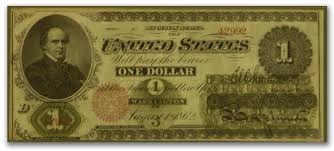
1862 dollar

An equally lasting achievement, according to Thomas Barnett in his recent book Great Power: American and The World After Bush, was that Lincoln "front loaded" America's post-war recovery which spread people and connectivity across the continent so that within a quarter century, America was poised to become the the dominant power of the 20th Century. Using five bills passed in the 37th Congress, Lincoln set the stage that would shepherd America into the next century. The Homestead Act  transferred 270 million acres of federal land to private hands. The Pacific Railroad Act began to tie the nation together and linked those far flung homesteads with the developed east. To make it easier to conduct business across the nation, Legal Tender Note made the "Greenback" bill we came to know and love. To lay the groundwork for higher education, the Morrill Act was the first federal aid to education bill by providing land for colleges in each state. Finally, the Second National Bank Act stabilized the banking institutions with the issuance of Treasury bonds and created a uniform monetary policy. Lincoln pulled this off with the 37th Congress that was seated with a Republican majority in both houses after the Southern states withdrew their members.

So When you are next casting about for something profound to say at the next social get-together remember the second most important date in American history. And for those who like counter-factual considerations, imagine how we would have fought World War I or II or contronted the Cold War if we were still a loose collection of states. We'd have looked just like NATO, made up of European Union countries, trying to organize themselves to end Gaddafi's rule or muster more that token support for Afghanistan. 

Saturday, April 9, 2011

USS Iowa BB-61: Update

USS Iowa leading the fleet
USS Iowa training out her guns
USS Iowa in rough seas
Iowa coming home
Anyone who has visited or given this blog more than a casual glance will recognize I take a great interest in the United States Navy and especially their role in the Pacific during World War II. A few day ago I wrote about the possibility that Southern California will soon be the home port for the newest addition to a long list of navy museums that preserve and honor our naval heritage.
Scale model of USS Iowa at Pier 87
Model overview of pier 87
Today, I attended a special event at pier 87 in San Pedro , once home to the Battle Fleet before 1940 and major shipyards during World War II and after. The event was to gather support for a California Assembly Resolution to support awarding the battleship USS Iowa BB-61 to San Pedro, with a new mission of offering education programs in history, leadership, team-building, character development, and community service, as well as serving as a disaster control center. First and foremost, ship will assume a unique "Living Museum" role that will provide visitors with an "at sea" experience that will trace the Iowa's 50 year history.

Fire boat Warner L Lawrence
USS Iowa being moved
If all goes according to plan, the dog days of summer will see Los Angeles Fireboat Warner L Lawrence  leading a parade that welcomes the Iowa to her new home at Berth 87 . The support for this project has been astounding and includes former President George H. W. Bush , community, state, business and veterans organizations. As things move along and the final details are worked out this blog will keep you posted and give plenty of notice to invite all to come welcome this great lady to her new home.

In the coming years, as the memory of World War II and the Cold War fade with the passing of the greying veterans amongst us, this ship will live on; to offer a hallowed space for future generations to contemplate what it was like when men steeled their hearts, to sail such ships into teeth of fascism and totalitarianism.

Saturday, April 2, 2011

Reflections on History and the War in the Pacific

USS Iowa BB-61

May 14, 15 2011 Chino, Ca

SS Lane Victory

Fort MacArthur Battery Osgood-Farley

Over the past couple of weeks, as my work load permits, I have been engrossed in time travel back to the waters off Guadalcanal with exotic sounding names like the Sealark Channel, Cape Esperance and the waters off Savo Island, where over a period of 116 days the United States Navy fought seven major naval battles with the Imperial Japanese Navy. The conveyance of my travel was the superb account, Neptune's Inferno by author James D Hornfischer who is turning out to be this generation's Samuel Elliot Morison for his vivid and moving accounts of the United States Navy in the Pacific.

This brings me to the subject of this post. For most Americans today, World War II is fast fading into the rearview mirror as veterans pass from our midst and history in general is thought to be treated as no longer relevant in a world where things are moving fast forward. Even the United States Army is considering closing their Army Heritage Education Center. History has been modified and marginalized in many colleges and universities where the focus is on teaching management and social skills before reflection on what history has to teach us about ourselves. My personal experiences in both teaching history and in being approached by people in my personal life has reinforced my belief that people have an innate desire to know about the events and experiences of those who came before them. It is in that vein that I want to share some of the great sites around Southern California that offer opportunities to learn about World War II.

For those wanting to experience what it was like to be a pilot in World War II, a short journey east of Los Angeles will bring one to Planes of Fame Air Museum where dozens of aircraft are on display and each May sees an excellent Air Show which this year is dedicated to 100 years of Naval Aviation.

San Pedro a community aside the Port of Los Angeles is already home to the SS Lane Victory a fully functional World War II victory ship and the Fort MacArthur Museum at Battery Osgood-Farley. It appears that this fine duo of historical sites is soon to be joined by what should be the crown jewel of World War II historical museums on the West Coast the battleship USS Iowa BB-61. Currently all is in place and awaiting the Navy's decision on where the ship will be located. The benefits to both visitors and for local schools will be a legacy to those who left these local waters and sailed into harms way. My family has a personal reason for supporting this project. My father met my mother at a USO dance when his ship the USS Zeilin AP-3 was being repaired after an encounter with a few Japanese bombers the day before Naval Battle of Guadalcanal.

Finally, across the bay on the Long Beach side lies the majestic Queen Mary who's wartime service saw her carrying whole divisions across the Atlantic in preparation of the invasion of Europe.

So if all goes according to plan, the Summer of 2011 will find San Pedro a target rich environment for learning about the history of the Pacific War. Reflecting on the war this way offers a person the opportunity to gain some insight on the experience of the sailor and soldier and what they felt as they stood at their stations or maned their guns or in the cockpit. The lessons of duty and courage are enshrined in the decks of these ships and in the sound of the engines of those planes that take to the air every May to honor those who willingly put their futures on the line so that others might live. We will always own these men and women our lives and the lives of all who come after us.

Wednesday, November 17, 2010

China on My Mind


China has and will always be on my mind, and since I met my wife, in my heart. That said, I am not an apologist for their current or past system of government and in fact find it counter to what I believe in; and in my youth fought mortally against. This week a few of the blogs I follow have had an exceptionally rich number of posts, seeking to counsel, warn, and decipher our current and future relations with the mystical dragon that is economically breathing down our necks as it approaches our status as the worlds strongest economy from behind.

Thomas Barnett has been in the forefront of counseling that we need to manage China's rise much like Great Britain shepherded the rise of the United States as a great power in the early 20th century. Barnett has written over 200 posts this year that are tagged about China. This week was no exception and this quartet of posts lays out more sensible ideas for how we should respond to what in reality is the return of China to the world stage as a great power, a position she held for most of her 5000 year history.

First is this piece with tips about how to blunt and put the brakes on demonizing China here at home.
Trying to Unwind this Demonization Trend

Tom follows that post with this post and link to his World Politics Review column, with the viral video of the now famous Chinese Professor.
Using China to Scare Ourselves Straight

Then this about how demographics are going to change  the world, once again!
Globalization's Massive Demographic Bet

Tom then looks at the FDI or Foreign Direct Investments over the past century.

Fascinating really: you can see the decline of the British empire, then the US stepping in to fund so much of the world post-WWII, and then our own progressive decline as the rest of the West recovered, then Japan rose (and fell), and now China rises. Naturally, some will wish to make the comparison of the decline of the US "empire" with that of the Brits', but our system was never set up to maintain dominance. It was set up to encourage the rise of others peacefully, which it's done (65 years of no great power war and counting, the biggest increase in human wealth/income ever seen, billions avoid poverty). The world simply couldn't handle the rise of great powers--until we came along and forced a system that could. It is, without doubt, the greatest accomplishment of any great power in human history.
Read more:
Strange Days

On the heels of this, comes a second broadside of common-sense fired directly at the leadership in Washington. Here is just of taste of what is coming.

Our definition of a "responsible stakeholder" is "do everything the way I want it and THEN you can be my friend!" That's not how you treat an ally; that's how you treat a dog. If we have FDR today, he'd deal and he'd deal with confidence. That guy believed in his system, and had no fears dealing with authoritarian regimes. But we don't have any FDRs today. Reagan and Clinton were the last, it seems: guys who knew how to cut deals, compromise, move the ball--with confidence in their country and its future. Now we have such little people with little minds (yeah, Bloomberg said it and I repeat it!). We bluster and we strut and we're being ignored more and more--a trend I trace back to the beginning of W's 2nd term (Katrina proves we can't nation-build abroad or at home).


UPDATE: STRANGE DAYS (UPDATE)

Coming on the heels of Barnett's posts comes this brief post by Robert Farley at Information Dissemination who discusses what he correctly labels a fractured Chinese foreign policy.

China is full of many people who want many different things. Like the U.S. national security apparatus, the Chinese government harbors a plethora of different foreign-policy perspectives, some focused on trade, others on power, and still others guided by domestic political concerns. Moreover, the Chinese government is no longer the only actor of consequence in China. Chinese public opinion increasingly constrains policymakers, and can even force them into action they don't want to take. Like all states, China is fractured. Recognizing its fractured nature is the key to developing an effective U.S. policy toward China's rise.
Don't miss the links to Robert's column at WPR, and the very interesting Stockholm International Peace Research Institute (SIPRI report about China.

Read More.
Fractured China

Now where is this all going? Most might think that Robert and Tom's posts are preaching to the choir of their readers and will have little impact on those counting on tapping into the national malaise of anger and self doubt that in part came from our own drunken binge on the scent of cheap money and easy credit terms along with feeding at the trough of feeling our oats for the past half century.

We need a wake up call, but more importantly we need leadership that is visionary in the vein of a Roosevelt or a Lincoln whom front loaded the next quarter century of economic growth for America while in the depths of  war. Lincoln in his five important bills during the 33rd Congress, and Roosevelt in holding Churchill's feet to the fire about shedding their colonies after the war and then taking the leadership role in conducting the war at Tehran in 1943. We continue to suffer from mediocrity and men blinded by hubris and measures of implanted self-destructive genes.

Recently I have been reading two books as mentioned in a previous post . The thread of what would happen when we insist on a hasty and blind charge towards one man one vote democracy in countries with massive iniquities. Think what would happen in China if the people all could have an equal say in their policy while most of the country is barely out of grinding poverty. They would be mailable to someone who could seize the moment and their new found nationalism in what is dubbed by the Chinese leaders as Netizens who by far display extreme nationalist tendencies that mirror the worst of mid-20th century Germany and Japan. We only have to look south to view Venezuela and how Hugo Chavez has harness the poor to vote him president for life and start down the road of creating an almost fascist state, ditto Bolivia and over the horizon, watch for Ortega in Nicaragua. Honduras just stopped short of allowing their president Zavala to proceed down that path.

If we play our diplomatic cards right we can see a peaceful rise of China that operates in a capitalist system with Chinese characters and is a partner in developing and spreading the system of free market and capitalism that sprang from the fountain of hope and opportunity called the United States.

Finally, to share a small story about China. My mother and father in-law lived through the worst of the Cultural Revolution and being professors of foreign languages were sent out to the fields as punishment and re-education. They don't speak of it and I only recently learned how badly my father-in-law's health was broken during that time. Quietly as the worst passed, they raised their two daughters to learn foreign languages and as soon as possible, encouraged them to leave, one to Germany and the other to America. Today, they live the quiet lives of the retired, but knowing what they must have endured and then finding a way to re-purpose themselves and go on and remain proud of their nation for it's long endurance and heritage gives me pause to reflect on their strength of character. And also, their wisdom to not want to see their daughters and grandchildren fall victim to the same spasms of what happens when the citizens run amok.

Sunday, November 7, 2010

When Random Musings Start to Converge


Between classes and the ever present drive to understand our world and in my own small way pass something of value along to the next generation, I find myself wedging these next pursuits like bookmarks in the journal of my life. To me it is vital to teach or encourage reflection about history, responsibility, and the essence of what brought us to this point, and hopefully what will lead the next generations to choose the right course for a future worth living.

That is why during my readings this week I am posting links to things that are both troubling and insightful as a way of prompting some sliver of cognition and thought about what we have seemed to have wrought in the first decade of the 21st century if we stay the course of self-indulgence and overt entitlement without taking personal responsibility.

Amid this weeks blog readings, I am deep into reading two books that on surface seem disconnected. But upon deeper reading begin to reveal some insight into democracy and the rule of law and how they work in relation to reality. Or better said. Be sure of what you might get, when you wish for it with all your might.

First, thought let's reflect on the state of America and what we seem to have become in the first decade of the new century. blog friend Robert Patterson  wrote this post about the state of leadership and what he notes is the ruling class of the United States. Rob, begins by stating that America is ruled by an aristocracy, only to change his opinion when another blog friend Mark of Zenpundit pointed out the following and led Rob to declare.
I prefer Mark's term "Oligarchy" on reflection - An Aristocracy goes to war with its people - Has a shared sense of community and knows it has Obligations - These people have none of this. They care ONLY for their own interest.

Rob goes on to reflect the following and backs up his observation with data from the link below from Nick Kristoff in the NYT.

So what about the Dream? This situation is OK I suspect for many Americans so long as they believe that they could rise too. But is this possible for many people? It is still for a few - start Google or eBay and you are in. But with the middle class being impoverished cut off and excluded by cost from the filter schools - with the working class being slaves - I see social mobility being less. I suspect that the Dream is no more than a Lottery idea now. Yes it happens but the odds are very very very small.
Our Bannana Republic

I usually find Kristoff a bit Pollyanna in his observations at times, but let us look further at the evidence he cites and let you the reader make your own interpretation of the facts.

Read more:
The United State of Inequality

Read Rob's reflections.
Is America Ruled by an Aristocracy Now? Of course it is!

And since I am asking you to dwell on the growing inequality of life in the United States. Let's pause to reflect on this article about how 99% of the population doesn't know or particularly care about the 1% who are fighting our wars.

AT FORT CAMPBELL, KY. Emily Franks was playing with her toddler when a soldier called from Afghanistan with devastating news.
A massive roadside bombing had killed five soldiers from her husband's 120-man infantry company. The soldier was calling Franks, who was at the center of a wives' support network, in violation of a military-imposed communications blackout on the unit.
Using an Afghan cellphone, he told Franks that her husband was safe, but that the company commander was probably dead.
Franks's cellphone beeped. Kitty Hinds, the company commander's wife, was calling.
"I gotta go," Franks told the soldier.
She was sure that Hinds was going to tell her that her husband had been killed. Hinds, however, was oblivious to the events 7,000 miles away in Afghanistan. It was a perfect afternoon and she was driving her three boys home from baseball camp.
Franks struggled to mask the dread in her voice. Her pulse raced as she said goodbye. "It was horrid," she recalled. "Absolutely horrid."
Reading this brought to mind other wars, where the notification of a loss was presented in a less personal way. One women during the early days of the Vietnam War stepped forward to try and lessen the blow of such a loss Julia Compton Moore wife of then Lt. Col Hal Moore, began to to intercept the notifications from the taxi drivers and make the notification herself. Things have not changed, for most Americans the sacrifice is off their radar unless it touches their family.

Read the whole article
Facebook brings the Afghan war to Fort Campbell

What do these two posts have in common? Look at Mark's definition of an "Oligarchy", and then think that we even leave it to the military to raise money for additional help for the wounded. Soldier's Angels. Where is the richest 1%? Certainly not stepping up to the plate in a show of personal responsibility or leadership that would let them reclaim the title of  an "Aristocracy" that for most of our history has been open from the bottom just enough to fuel the dreams of millions.

  Turning back to to books that I am currently reading. Both came by way of recommendations. Blog friend Critt Jarvis asked me to look at The Good Coup: The Overthrow of Manuel Zelaya In Honduras. The book is a collection of articles by Marco Caceres Di Inrio that chronicles the removal of Zelaya as the President of Honduras on the eve of his trying to change the constitution from a single term for president to one that allowed a person to run for the office of presidency as many times as they wanted. Now on the surface of wanting democracy for everyone, this seems noble. But, what happens when that path leads to just another form of dictatorship, where you end up with a presidente for life, in the vein of Venezuela, Bolivia, Ecuador, or Zimbabwe or a dozen other quasi-democracy's where the rule is dictatorship by the 51%.

I have not finished the book, but the main idea is that the country suffered from poor governance which leads to corruption and poverty, leaving the majority of the people feeling they have no voice. President Zelaya in trying to change the constitution to allow for his continued re-election, led those who wanted to preserve democracy, to remove him from office. The silver lining of this whole event is that the plight of the vast majority of Hondurans who are poor and powerless is getting the attention of all Hondurans who now have a chance to resolve the inequities.Honduras Rising.


The second book I am reading moves the view 8,369 miles to the northwest and the view from Beijing. Tom Barnett first called my attention to a book by John Milligan-Whyte and Dai Min. Curious to read a different approach of how to build an consensus of success between the United States and China, I ordered a copy and have just begun to delve into their Sino-inspired suggestions.

Right away, the first impression landed on the contrast of China's "Permission Society," "Consensus Democracy," and a "Pre-Rule of Law Society," and America's "Rights Society," Majority Rule Democracy," and the "Rule of Law" society. They argue that in our haste to impose a majority rule democracy on China, that we may not like the results of an empowered mass of people filled with  nationalist pride that has little experience with anything but 50 centuries of central authority and direction. Do we really want that? Whyte and Min argue that China would be more nationalistic and swayed to anti-American parties than a stable one-party state, that governs from a pragmatic view. I will be reflecting more on this book as I progress through it. Their main thesis is that for either country to survive and more importantly succeed, we need to forge a strategy that allows both countries to benefit and succeed in the 21st century. They are convinced like our own first decades as a nation, "that in time, democracy with Chinese characteristics will emerge." Their views are a bit from the other side and somewhat opposite those of the average American, but well worth the read to gain insight and build bridges to the future.

Read Tom's summary
Another Mention in Peoples Daily

Well that is enough reading and pondering for a while. We just had an election that allowed the American people to voice their displeasure with the direction of the country. The next two years will either find our bearings and a way out of the shoals we find ourselves in, or we will vote for another major course correction.

Sunday, August 1, 2010

Collapse? or Will Americans Hear the Fire Bell in the Night?


To borrow from Thomas Jeffersons reference to the slavery, "A Fire Bell In The Night" the posts this week look to the crisis in direction and leadership that seem to threaten America's future.

This week, top billing is awarded to two posts that seem to channel the 2012, End of the World phenomenon.

Leading off is this from Mark of zenpundit who linked a provocative post from Dr. Paul Craig Roberts who in Mark's words.
...penned a short but intriguing American ”collapse” scenario set in the near future. Some of what Roberts writes fits neatly with the thesis in Joseph Tainter’s The Collapse of Complex Societies:

Mark goes on to expand on his comments.
Several interesting things here. First, the demagogic front men who are currently engaging in op-ed tirades against public pensions in order to loot them to ostensibly plug state budget deficits will, if successful, use that precedent to go after private pensions, IRAs, 401(k), mutual funds, Social Security, Medicare, Home mortgage interest deduction - any remaining big pot of money in the hands of the middle-class has a big target on it. Secondly, food shortages historically were the spark that set off the French and Russian Revolutions.
 
So far, this post has sparked a healthy set of comments that expand on the original thesis.
 
Read the whole post.
An Interesting "Collaspe' Hypothetical
 
Channeling many of the same scenario is this post by the intrepid naval centric blogger Cdr Salamander who posted this review of an article by historian and author Niall Ferguson. Ferguson foresees the possiblilty of a sudden collaspe of America's fortunes if we continue down the path of un-controlled spending.
 
I will invite the readers to visit the good Commander's site and read the main points he highlights. I will tease you with the CDR's final words.
The view from the outside is often needed.
Things are fixable - but time is money, and we are running out of time to stop this run to the cliff's edge.
Read the whole review and then visit the link for more from Ferguson.
Such is the end of Empires

Scary stuff, that invites more pondering of the situation faced by Americans, used to overcoming huge challenges before. In this next post, also from Zenpundit who gets a major hat/tip for introducing a post by Joseph Fouche of the Commitee of Public Safety.
A wise man once told me that a weakness of our Constitutional system was that the Framers implicitly presumed that people of a truly dangerous character, from bullies to bandits to political menaces to the community, would primarily be dealt with in age-old fashion by outraged neighbors whose rights had been trespassed and persons abused one time too many. They did not prepare for a time when communities would be prohibited from doing so by a government that also, as a whole, had slipped the leash. Indeed, having read Locke, Montesquieu, Cicero, Polybius, Aristotle and Plato, they expected that such a state of affairs was “corruption” of the sort that plagued the Old World and might happen here in time. A sign of cultural decadence and political decay. They gave Americans, in the words of Benjamin Franklin, “A republic, if you can keep it”. It remains so only with our vigilance.
It is happening now.
We have forgotten - or rather, deliberately been taught and encouraged to forget - the meaning of citizenship.
We have let things slip.
Joseph Fouche superbly captures this implicit element, the consequences of the loss of fear of informal but very real community sanction, in his most recent post:
Marks superb introduction, is equaled by Joseph's razor sharp observations.

The Mob of Virtue

Finally comes this example of how an informed  mob can effect change. Read this story of the citizens of a small city in California took back their town.

A True Populist Revolt

In contrast to the dire posts above. This last two show that an engaged and informed citizenery can effect change by peacefully voicing their outrage, or at the ballot box. Time will tell if enough care to put their feeling of entitlement aside and vote as if their childrens future mattered.

Thursday, March 25, 2010

Hark! The Glow on the Near Horizon is The Dawn of A New Blog.


Coming Soon! The Naval History Blog.


First and foemost, this blog is an excursion into the most intriguing questions, theories and musings that continue to facinate naval historians. It is a meeting place where renowned scholars and self-taught history buffs linger and share ideas and prespective on naval events that shape nations.
The Naval History Blog is hosted by two organizations steeped in the traditions of naval history, which see it as a cornerstone of their missions. The U.S. Naval Institute and the Naval History & Heritage Command are working together to bring their considerable intellectual resources and passion for naval history to this destination
The official announcement of this new blog by Tom Wilkerson, Major General, USMC (Ret.), U.S. Naval Institute and Jay A. DeLoach, Rear Admiral, USN (Ret.) Director of the Naval History & Heritage Command, speaks to the heart of what this new blog is all about.

The blog is still on the stays; has just been christened, and will be commissioned and launched this coming week.

I am honored to have been invited to be a plank owner in this excellent endeavour.

Sunday, February 14, 2010

Abraham Lincoln, Feb 12, 1809-April 15, 1865


Almost completely overshadowed by the opening of the Winter Olympics, Valentine's Day and the NBA's All-star game weekend was the 201st birthday of President Abraham Lincoln on February 12th. Lincoln deserves special recognition because without his resolve and determination to hold the nation together, the United States might have a completely different make up or might not even exist at all.


Let's pause for a moment and think what might have happened if Lincoln had failed and the eleven Southern States had succeeded in leaving the Union. Aside from slavery still existing for perhaps another generation or two in the south, the glue to hold other states would have been weakened and subject to being pulled away as the twin continental stakeholders vied for new member states in the west. The two weakened nations would have be hard pressed to keep European nations, drunk on the wine of 19t century colonialism, from trying to carve off chunks of the West Coast. As is, we have only counter-factual fanaticizing for a guide of what might have happened.


What is know is that historians looking back at the facts prior too, and after the Civil War, and into the 20th century have pretty much reached a consensus that Lincoln not only ended slavery, in itself the noblest of accomplishments, but in his resolve held the Union together, creating one unified nation, and almost as importantly front loaded the rulesets so that after the war ended the United States was ready to grow into the modern nation-state we know today.

For the average American we learned about Lincoln in our elementary and secondary education. Unless you are a history major, he fades to be recalled when we happen on his countenance as we fumble with those pesky pennies, or pull a five to pay for a latte at Starbucks. Let's take a few moments to recall some of those often overlooked ruleset changes.


Abraham Lincoln's hero was Henry Clay U.S. Senator and leader of the Whig Political Party. Lincoln transformed many of Clay's visions into his own goals and when elected along with a super majority in Congress in 1861 This set the stage was set for a series of legislative bills that would solidly put the United States on a course to explode onto the world stage in the last quarter of the 19th Century. These bills came about during the term of the 37th Congress, March 1861 to March of 1862. The most important of those bills are listed below.

The Homestead Act, which gave title to 160 acres outside the original 13 colonies to any one who could improve the land and live on it for a period of years. The result was by the end of the century 10% of all public lands had passed to private individuals.

The Pacific Railway Act which tied the nation's coasts together in a steel ribbon that grew commerce and culture in a thousand offshoots and gave the nation a sence of unity.

The Legal Tender Act of 1892 created the parent of the greenback paper money we use today and replaced the hundreds of different bank issued notes previously used as tender.

The National Banking Act of 1863 established a system of uniform national charters for banks to support using the national currency issued under the Legal Tender Act.

The Morrill Land Grant Colleges Act which encouraged the founding of colleges and universities by making public land available as grants. The act lead to hundreds of colleges including MIT and Cornell University being founded.


And seminal to Lincoln's legacy is The Emancipation Proclamation, which errased all doubts about ending slavery once and for all.

To gain some insight on Lincoln's legecy and how it fits into today's world, I would recommend two recent books that distill the essence of what Lincoln and men like Henry Clay whose influence played into Lincoln's vision. First, Great Powers America and the World After Bush by Thomas PM Barnett where chapter three recaptures the history of the republic and how our economic system has led to 3 billion people moving out of poverty in the past two decades. Next Howard Bloom in The Genius of the Beast writes about how the Civil War took what Lincoln had called an "association of states," to "a more perfect union" and "a national government. If you want more indepth information, Daniel Walker Howe's What Hath God Wrought gives you 853 pages of incredible reading about the period of 1815-1848, followed by The Battle Cry of Freedom by James M McPherson at 952 pages of history at it's best.