Showing posts with label zenpundit. Show all posts

Sunday, September 11, 2011

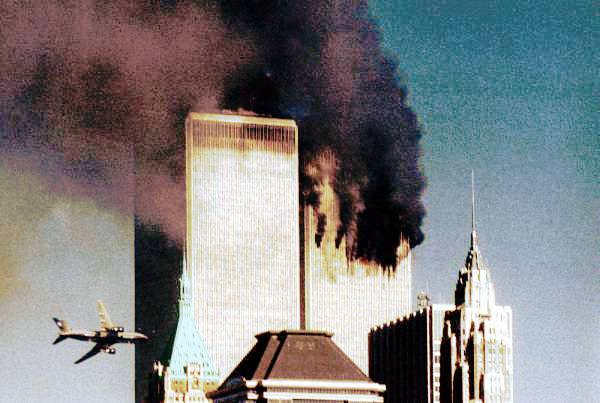
9/11 A Reflection


I am sharing a post from fellow American and blogger Mark Zafranski from his excellent site zenpundit.com.  Mark's words reasonate with all of us who have lived through the past ten years and have seen it change our country. Read his eloquent words carefully, and then measure you own feelings and see if you don't agree.

The Nine Eleven Century?

September 11th, 2011
nineleven2.jpg

Ten years ago to this day, almost to the hour of which I am writing, commercial jetliners were highjacked by al Qaida teams armed with boxcutters, under the direction of Mohammed Atta, were flown into the towers of the World Trade Center and the Pentagon. A fourth plane, United Airlines Flight 93, believed to be headed to the US Capitol building, crashed in Pennsylvania when passengers led by Todd Beamer heroically attempted to stop the highjackers. The whole world watched - most with horror but some with public glee - on live television as people jumped out of smoke-engulfed windows, holding hands, to their deaths. Then, the towers fell.
From this day flowed terrible consequences that are still unfolding like the rippling shockwave of a bomb.

We look back, sometimes on the History Channel or some other educational program, at the grainy, too fast moving, sepia motion pictures of the start of World War I. The crowds wildly cheered troops with strangely antiquarian uniforms that looked reminiscent of Napoleon’s day, march proudly off to the war that gave Europe the Somme, Gallipoli, Passchendaele and Verdun. And the Russian Revolution.

After the armistice, the victors had a brief chance to reset the geopolitical, strategic and economic patterns the war had wrought and in which they were enmeshed. The statesmen could not rise to that occasion, failing so badly that it was understood even at the time, by John Maynard Keynes and many others, that things were being made worse. World War I. became the historical template for the short but infinitely bloody 20th century of 1914-1991, which historians in future centuries may simply describe as “the long war” or a “civil war of western civilization”.

There is a serious danger, in my view, of September 11 becoming such a template for the 21st century and for the United States.

On the tenth anniversary of 9/11, as we remember the fallen and the many members of the armed services of the United States who have served for ten years of war, heroically, at great sacrifice and seldom with complaint, we also need to recall that we should not move through history as sleepwalkers. We owe it to our veterans and to ourselves not to continue to blindly walk the path of the trajectory of 9/11, but to pause and reflect on what changes in the last ten years have been for the good and which require reassessment. Or repeal. To reassert ourselves, as Americans, as masters of our own destiny rather than reacting blindly to events while carelessly ceding more and more control over our lives and our livelihoods to the whims of others and a theatric quest for perfect security. America needs to regain the initiative, remember our strengths and do a much better job of minding the store at home.

The next ninety years being molded by the last ten is not a future I care to leave to my children. I can think of no better way to honor the dead and refute the current sense of decline than for America to collectively step back from immersion in moment by moment events and start to chart a course for the long term.

Now please visit the link below to read the post in full and the important embedded links.
The Nine Eleven Century

Sunday, August 28, 2011

Brain Food for a Sunday Afternoon

Lt Col. David Anderson, Kanani Fong, and family


This Sunday as the Eastern seaboard begins to relax and restore power and pump out flooded basements in the wake of Hurricane Irene, an article in Southern California's Orange Country Register remind us that we are just two weeks away from pausing to remember the day modern America changed forever. The article was penned by my good friend and fellow blogger Kanani Fong, who in addition to being a gifted writer, is the wife of Lt. Col. David Anderson, an Army surgeon who just returned from his second deployment to Afghanistan. Her story told in her own words show the depth of commitment that many Americans have felt to their country and fellow citizens since September 11, 2001. She begins.
Loving someone at war is the second-worst kind of missing you will ever experience. The worst kind of missing is if they die. We don’t like to think of it, but we do.

My husband, Lt. Col. David B. Anderson, joined the Army as an active-duty surgeon when he was 52. Since then, this midlife turn of events has taken him to two areas of conflict. First was Kunar, where he was the surgeon in charge of the 759th Forward Surgical Unit. The second, from which he just returned, was in Herat. Both were in Afghanistan.

Deployments have a rhythm: Inhale, he’s here; exhale, he’s gone.
Kanani continues by explaining how she came to be an army wife in what she calls middle age and I call just reaching your plateau. In a few short paragraphs she explains how she has managed to raise their two teenage children and maintain both their home and still find time to lend her support to the troops and their families. Take the time to read the article and visit her blog the Kitchen Dispatch where she will keep you abreast on her life as an Army surgeons wife.

Read more:
An Army doctor's wife explains war at middle age

Rents in the fabric of Globalization

This next post comes by way of Steve DeAngelis who write the Enterprise Resilience Management blog. In this post Steve examines the rents in the fabric of Globalization and what America can do to mend them.
Overall globalization has been a good thing for the world. Millions (if not billions) of people have emerged from poverty's grasp as globalization washed over the shores of the better part of the world during the last several decades. Admittedly, globalization's effects have varied by region and state. Along with winners globalization has created some losers. As a result, globalization's fabric has become threadbare in spots. Jeffrey Sachs, a well-known advocate for the underprivileged and director of The Earth Institute at Columbia University, points out, for example, that unskilled labor in developed countries like the United States has been hit hard by the consequences of globalization. ["Tripped up by globalisation," Financial Times, 18 August 2011] Sachs insists, "The path to recovery now lies ... in upgraded skills, increased exports and public investments in infrastructure and low-carbon energy."
Steve continues his post by building off  the original prescription by Jeffrey Sachs, where he brings much needed insight from someone who is fulfilling a calling to help develop a future worth living.
Although I agree with Sachs on the basic thrust of what is required to bring real recovery to the U.S. economy, we differ in some particulars. Sachs, for one thing, believes corporations should be taxed more heavily. I fear that would only make matters worse since corporations would likely send more of their money to tax havens overseas. Clearly, tax revenues need to increase and government spending needs to be reeled in if basic government needs and essential social services are going to be provided; but the best way to increase tax revenues is to put people back to work. Corporations that create jobs should be rewarded for their efforts rather than be penalized. I've argued since the beginning of the recession that more needed to be done to encourage entrepreneurs to start businesses and hire employees. Unfortunately, it looks like politicians are more interested in pointing fingers of blame at each other than they are about trying to work together to stimulate job creation. Getting off the soapbox, let me return to the subject of globalization.
Read more:
The Holes in Globalization's Fabric

Have we reached this point in our history?

Finally, comes this guest post over at Zenpundit written by Pundita who uses an amusing video to introduce and illustrate her point.
The title of this post refers to the punch line in a series of TV commercials in the USA for Sears Optical eyeglasses. The ads feature amusing skits of people in serious need of a pair of glasses, such as the woman who mistakes a police patrol car for a taxicab. But helped along by bravura performances from Tara L. Clark as a blind-as-a-bat cat owner and Squirty as a wild racoon who can’t believe his luck, one of the skits is so funny it’s gone viral on the internet:
Pundita notes the contribution of the master of zenpundit Mark Safranski to the discussion with this comment.
Over at ZenPundit, Mark Safranski has again expressed concern about what he calls an emerging American oligarchy, an elite that’s manipulating the rest of the American populace to accept its rule. Meanwhile, Fareed Zakaria is seriously proposing that America replace its president with a prime minister and Congress with a parliament — with an upper house, I suppose, to be stuffed with Mark’s oligarchs, duly elected of course, so that Americans will stop the troublesome habit of vehemently disagreeing with one another. 
Read and watch for a final desert of brain food.
Missing Something?


Sunday, August 1, 2010

Collapse? or Will Americans Hear the Fire Bell in the Night?


To borrow from Thomas Jeffersons reference to the slavery, "A Fire Bell In The Night" the posts this week look to the crisis in direction and leadership that seem to threaten America's future.

This week, top billing is awarded to two posts that seem to channel the 2012, End of the World phenomenon.

Leading off is this from Mark of zenpundit who linked a provocative post from Dr. Paul Craig Roberts who in Mark's words.
...penned a short but intriguing American ”collapse” scenario set in the near future. Some of what Roberts writes fits neatly with the thesis in Joseph Tainter’s The Collapse of Complex Societies:

Mark goes on to expand on his comments.
Several interesting things here. First, the demagogic front men who are currently engaging in op-ed tirades against public pensions in order to loot them to ostensibly plug state budget deficits will, if successful, use that precedent to go after private pensions, IRAs, 401(k), mutual funds, Social Security, Medicare, Home mortgage interest deduction - any remaining big pot of money in the hands of the middle-class has a big target on it. Secondly, food shortages historically were the spark that set off the French and Russian Revolutions.
 
So far, this post has sparked a healthy set of comments that expand on the original thesis.
 
Read the whole post.
An Interesting "Collaspe' Hypothetical
 
Channeling many of the same scenario is this post by the intrepid naval centric blogger Cdr Salamander who posted this review of an article by historian and author Niall Ferguson. Ferguson foresees the possiblilty of a sudden collaspe of America's fortunes if we continue down the path of un-controlled spending.
 
I will invite the readers to visit the good Commander's site and read the main points he highlights. I will tease you with the CDR's final words.
The view from the outside is often needed.
Things are fixable - but time is money, and we are running out of time to stop this run to the cliff's edge.
Read the whole review and then visit the link for more from Ferguson.
Such is the end of Empires

Scary stuff, that invites more pondering of the situation faced by Americans, used to overcoming huge challenges before. In this next post, also from Zenpundit who gets a major hat/tip for introducing a post by Joseph Fouche of the Commitee of Public Safety.
A wise man once told me that a weakness of our Constitutional system was that the Framers implicitly presumed that people of a truly dangerous character, from bullies to bandits to political menaces to the community, would primarily be dealt with in age-old fashion by outraged neighbors whose rights had been trespassed and persons abused one time too many. They did not prepare for a time when communities would be prohibited from doing so by a government that also, as a whole, had slipped the leash. Indeed, having read Locke, Montesquieu, Cicero, Polybius, Aristotle and Plato, they expected that such a state of affairs was “corruption” of the sort that plagued the Old World and might happen here in time. A sign of cultural decadence and political decay. They gave Americans, in the words of Benjamin Franklin, “A republic, if you can keep it”. It remains so only with our vigilance.
It is happening now.
We have forgotten - or rather, deliberately been taught and encouraged to forget - the meaning of citizenship.
We have let things slip.
Joseph Fouche superbly captures this implicit element, the consequences of the loss of fear of informal but very real community sanction, in his most recent post:
Marks superb introduction, is equaled by Joseph's razor sharp observations.

The Mob of Virtue

Finally comes this example of how an informed  mob can effect change. Read this story of the citizens of a small city in California took back their town.

A True Populist Revolt

In contrast to the dire posts above. This last two show that an engaged and informed citizenery can effect change by peacefully voicing their outrage, or at the ballot box. Time will tell if enough care to put their feeling of entitlement aside and vote as if their childrens future mattered.

Saturday, July 17, 2010

Ironic Military Musings

Roman Legion


American Citizen Soldiers


It's ironic how unrelated posts will appear simultaneously in the blogosphere only to be recognized as sharing a common theme. This past week’s offerings were no exception. The war in Afghanistan and in turn the military is the focus of this post on recommended reads and commentary.

Mark the master of Zenpundit posted the following as well as his comments on Dr. Bernard Finel's essay entitled, The Fall of the Roman Republic: Lessons for David Petraeus and America.

Mark adds this mid way through his comments:
Could we get a “man on horseback” or a “triumvirate”? Americans have repeatedly elected generals as President, including some of Civil War vintage who were, unlike U.S. Grant, of no great distinction and Teddy Roosevelt, a mere colonel of the volunteers, was a Rough Rider all the way into the Vice-Presidency. (Incidentally, I don’t see General Petraeus or any other prominent Flag officer today being cut from the mold of Caesar, Antony or Pompey. It’s not in the American culture or military system, as a rule. The few historical exceptions to this, MacArthur, Patton and McClellan, broadcast their egomania loudly enough to prevent any Napoleonic moments from crystallizing). Never have we had an ambitious general in the Oval Office in a moment of existential crisis though - we fortunately had Lincoln and FDR then - only after the crisis has passed and they were elected them based on the reputation of successful service. It is unlikely that we would, but frustrations are high and our political class is inept and unwilling to contemplate reforming structural economic problems that might impinge upon elite interests. Instead, they use the problems as an excuse to increase their powers and reward their backers.
When in Rome....

One of the themes in Dr. Finel's essay is the decline of the participation of free rural citizens in military service. This caused the following:
...At the time of the Cimbrian War (113-101 BC), the threat of foreign invasion by Germanic tribes forced Gaius Marius to replace the traditional Roman Army soldiered by land-owning citizens with one built around landless volunteers for whom military service was a career and who owed loyalty primarily to the general paying the bills rather than the state. Marius’ legions defeated the Germans, but a new instability had been introduced into the Roman state due to the tendency of these new volunteer forces to be loyal to personal patrons rather than state institutions.
Small Wars Journal sponsored this next essay by Lieutenant Colonel Paul Yingling, who lays out a good argument for the return of conscription as a way to spread the experience and civic responsibility for defending the nation to all strata’s of American society.
"The U.S. should therefore abandon the all-volunteer military and return to our historic reliance on citizen soldiers and conscription to wage protracted war. This approach proved successful in both world wars and offers several advantages over the all-volunteer military. First and most important, this approach demands popular participation in national security decisions and provides Congress with powerful incentives to reassert its war powers. Unlike the all-volunteer force, a conscripted force of citizen soldiers would ensure that the burdens of war are felt equally in every community in America.
Second, this approach provides the means to expand the Army to a sufficient size to meet its commitments. Unlike the all-volunteer force, a conscripted force would not rely on stop-loss policies or an endless cycle of year-on, year-off deployments of overstressed and exhausted forces. Third, conscription enables the military to be more discriminating in selecting those with the skills and attributes most required to fight today's wars.
Unlike the all-volunteer force, a conscripted force would not rely on exorbitant bonuses and reduced enlistment standards to fill its ranks.
The All-Volunteer Force: The Debate

LTC Yingling, raised valid points that carried the echo of the previous article by Dr. Finel. I would add that in the age of never ending commitments such as Afghanistan or Iraq, having an citizen soldier force structure would have shortened our commitment, by providing the manpower to have put over half a million boots on the ground as soon as the major combat was over. This would allow us to do as we did in post-war Germany and Japan; totally disarm the society and seal off any chance for outsiders to start trouble.

If we look to history, two branches of service the Navy and Marines have traditionally been staffed with volunteer enlistments. These services by their nature, should remain volunteer. The Army bending itself into a hybred force that has to meet COIN and SysAdmin demands while avoiding dulling the Leviathan tip of the spear, would be enhanced by a return to citizen soldiers.

And while we are on the military and how one of the requirements of living in a Republic means standing up to serve one's country. That leads to this segway to whether military officers should voice a political opinion.

Schmedlap posted this Military service and political office do not go together. His post dovetails right into Dr. Finel's post and Zenpundit's comments about relying on former military leaders to fix the countries woes.
Politics and the Military Profession

And bringing up the rear on whether today's officer corp is showing proper concern for the troops is this from Tom Ricks.

Wanat Why it Matters

All this comes after finishing Sebastian Jungers latest book WAR which provides the backstory to the documentary RESTREPO and devotes considerable thought to considering why men go to war. I will be writing more on my impression of the movie and Junger's book in the coming week. I will say that the similarities, like fleeting nightmares of a long ago experience were haunting reminders of my own brief interlude with war.

Saturday, June 19, 2010

New Roundtable: Defeat in Afghanistan? The View from 2050


Marines protecting Afghan father and son

Forward thinking blog friend Lexington Green, contributor to the Chicago Boyz Blog has announced an important upcoming blog roundtable this summer that will discuss a topic that for several months has been lurking in the minds of many people. Here is Lex's proposal for Defeat in Afghanistan? The View from 2050.

Voices from many quarters are saying dire things about the American-led campaign in Afghanistan. The prospect of defeat, whatever that may mean in practice, is real. But we are so close to the events, it is hard to know what is and is not critical. And the facts which trickle out allow people who are not insiders to only have a sketchy, pointillist impression of the state of play. There is a lot of noise around a weak signal.
ChicagoBoyz will be convening a group of contributors to look back on the American campaign in Afghanistan from a forty year distance, from 2050.
40 years is the period from Fort Sumter to the Death of Victoria, from the Death of Victoria to Pearl Harbor, from Pearl Harbor to the inauguration of Ronald Reagan. It is a big chunk of history. It is enough time to gain perspective.
This exercise in informed and educated imagination is meant to help us gain intellectual distance from the drumbeat of day to day events, to understand the current situation in Afghanistan more clearly, to think-through the potential outcomes, and to consider the stakes which are in play in the longer run of history for America, for its military, for the region, and for the rest of the world.
The Roundtable contributors will publish their posts and responses during the third and fourth weeks of August, 2010.
The ChicagoBoyz blog is a place where we can think about the unthinkable.
Stand by for further details, including a list of our contributors.
Cross posted at zenpundit


Many of those already signed on; represent a broad range of thinkers who will be bringing a convergence of ideas from all political, diplomatic and military points of view. One might question what a group of bloggers without political or military power can do that would influence policy or drive the discussion. That friends, is the power of this medium, to drive public discourse, something the mainstream media and the halls of Congress and the White House seems ill prepared to conduct.

Wednesday, December 9, 2009

"L'audace, l'audace, toujours l'audace."


Napoleon, and later General George Patton made "Audacity, audacity, always audacity." a famous phrase encouraging bold courage in the face of great challenge. In the same vein, blog friend Mark of Zenpundit has shown intrepid audacity for calling attention to the rogue beast roaming the strategy room in the White House for the past eight years.

It is the elephant in our strategy room - if the elephant was a rabid and schizophrenic trained mastodon, still willing to perform simple tricks for a neverending stream of treats, even as it eyes its trainer and audience with a murderous kind of hatred. That Pakistan’s deeply corrupt elite can be “rented” to defer their ambitions, or to work at cross-purposes with Pakistan’s perceived “interests”, is not a game-changing event. Instead, it sustains and ramps up the dysfunctional dynamic we find ourselves swimming against.


Mark is writing about a post that he linked from Dawn.com. The post itself is worth the read are many of the 200 comments. The comentary penned by Mark is masterful and as several of his readers note, is "spot-on." I think that his words ring out like Jefferson's metephoric "fire bell in the night," calling to, "America’s bipartisan foreign policy elite" to heed the warning before the mastodon turns on it's audience.

Read more: None Dare Call it A Rogue State.


After reading both Mark's post and the linked article, take the time to join the discussion or better; send a copy to your congressmen, senator, or even the White House, with a note that we are all watching and waiting for them to act with the same intrepid courage of those who call for this discussion.

Saturday, October 17, 2009

Week in Review-Best Reads

Human Mind
Zenpundit

Clinton and Obama, Eye to Eye?


There were an exceptional number of posts this week that deserve consideration for top billing. So in order to be fair, I will say that they all will share that title.

To get our cognitive juices flowing we first turn to Steve DeAngelis of Enterra Solutions who offers this insightful post. He begins by writing:

I'm fascinated by the workings of the human mind. Most people recognize that men and women use different thought processes, which is why Dr. John Gray was able to write a bestselling book entitled Men are from Mars, Women are from Venus. Thought processes are different for individuals as well as for genders. Mathematicians think differently than social scientists. Musicians think differently mechanics. Those of us who have never suffered from a mental illness can't really understand how some people can hear voices and see hallucinations.

Scientists continue to make discoveries about how the mind works. Yet even with all of the new discoveries, the mind remains pretty much a mystery. Learning more about our minds is important. After all, the thought is father to the act. In a world fighting crime, corruption, sexual perversion, and terrorism, the key to changing unacceptable acts may be understanding the thoughts that inspire them. In this post, I'm going to review a few recent articles I've collected about how we think and act. Let's begin with those impish little thoughts that can lead to bad behavior ["Why the Imp in Your Brain Gets Out," by Benedict Carey, New York Times, 7 July 2009].


Steve continues on, highlighting several articles that examine the latest in what science has learned about the human mind. A very worthwhile read for all interested in learning a bit about what rests between our ears.
Read more: More About Our Amazing Minds

After that bit of "brain food" we turn to Steven Pressfield of It's The Tribes Stupid! for tips on how to defeat the sinister roadblock Resistance, which has strangled more creative thoughts in the human mind, than all the murders in history.

If you’ve read The War of Art, you know that the thematic core of the book is the concept of Resistance. Resistance with a capital R, which the book defines as “an energy field radiating from a work-in-potential. It’s a repelling force. It’s negative. Its aim is to shove us away, distract us, prevent us from doing our work.”

Read more: Writing Wednesdays #12: Self-Talk and Self-Sabotage

Now that we have sharpened the understanding of our minds and steeled ourselves to defeat resistance, we are ready for some thought provoking posts that examine two parallel tracks; America's diplomatic and military future as they relate to the continued security of our nation.

Mark of Zenpundit penned this next piece that has garnered deserved recognition around the blogpsphere. Mark dubbed this a "quick "think" post," but after reading, I think you will find it to be anything but that. It offers real insight and sounds a warning that SOS Clinton, or more importantly, the Congress must act to save the office from becoming irrelevant, since it seems that the POTUS is not fully tuned into correcting this problem as long as his rivals (The Clinton's) reside in that office.

A quick ‘think” post.
It is generally a bad sign for a SECSTATE so early in an administration to have to come out and deny that they have been marginalized by the White House, as Secretary Clinton felt compelld to do the other day. The denial itself serves as confirmation of the fact.

It is tempting to write this off as another example of traditional, politically-motivated, battles between White House staffers, determined to protect the authority of the POTUS over foreign policy and the bureaucracy at State. We have seen this struggle in the past with Al Haig, Cyrus Vance, William Rogers, Cordell Hull, Robert Lansing and other SECSTATEs who sooner or later found themselves sidelined and excluded from key foreign policy decisions by the president. However, this is not just a case of Obama insiders distrusting and attempting to “box in” the Clintons as political rivals, by using other high profile players ( though that has been done to Clinton).
In this post, from Thomas Barnett from his weekly column in the War Room at Esquire. Barnett, voices obvious flustration at the attention span of the Amerian public during these critical times. Something that Ted Turner, founder of CNN has called the "pervert of the day" focus of the news media. Barnett's first sentence says it all.

Now that we know the damn kid was sleeping in his attic, can we return to Topic A? As in Afghanistan (and, lest anyone in the administration forget, Pakistan), for which Vice President Biden has been getting a lot of attention: Arianna Huffington is calling for his head, Newsweek is hailing him as a soothsayer, and most of America is wondering when the hell President Obama's going to make up his mind on "his war."

As I detailed here last week, it's a dangerous path for Obama to tread somewhere between "all-in" (Stanley McChrystal's method of controversy, with more troops, more nation-building, and more counterinsurgency) and "strategic disengagement" (Biden's weapon of choice, with more drones, more nation-leaving, and a refocusing on counterterrorism). On the one hand, I can almost see why the president would side with his veep: By essentially shifting "the good war" from Afghanistan to Pakistan, Obama purportedly saves money, lives, and support from an increasingly frustrated electorate.

Barnett ends his column by noting that if President Obama sides with Biden that he must turn to the very person he has been trying to marginalize to save our bacon.

So if Obama rallies behind Biden's somewhat precious definition of the "great game," he better be ready to dispatch Hillary Clinton pronto to a host of great-power capitals — not those of our NATO allies, but to those of the Shanghai Cooperation Organisation member states (Moscow, Beijing, and the "observers" in New Delhi and Tehran) — to determine the price they'll be willing to pay to make this enduring problem go away for good. By that point, of course, Al Qaeda will already be back in the saddle in Kabul.

Read more:Why Joe Biden's War Plan Spells the Rebirth of Al Qaeda

And finally, from Michael Yon this piece he wrote back in December 2008 and just published this week.
Afghan Lunacy

Saturday, September 5, 2009

Studying History from this POV

Zenpundit's avitar
Example of the lack of historical knowledge


Mark Safranski master of Zenpundit has posted what I would deem the read of the summer. His post comes at the end of a week that gave the world the chance to reflect on two important dates that occurred back to back and marked the beginning and the end of the most horrific event of modern history, A “Teachable Moment”, 70 Years On and Thank you Greatest Generation. These two events, have slipped the pages of memory for most, and are retained amid the shrinking cadre of people who count history as an important craft to be followed or taught.

Mark found the seed for his post in a post, September 1, 1939 by fellow blogger Lexington Green who invited readers to list their favorite book on World War II. Mark drew on Lex's post to pen an important piece on the state of teaching history in our public schools.

The ideological Marxoid craziness of which Lex writes does indeed exist, though it is far more common in university courses than in secondary school classrooms ( Oak Park, though, is a pretty liberal UMC burg) and more common in urban school districts on the coasts than in the Midwest or South. In particular, I have seen firsthand at national conferences, teacher-zealots from California who appear to have been kicked out of Trotskyite Collectives for excessive radicalism and who are more like the mentally unsound homeless than someone entrusted with the education of children. They are largely scary exceptions though. The main problem with the teaching of history in our public schools is that as far as subjects go, history is a tertiary concern of government officials, administrators and school boards; as a result, most of history instructors are hard working and well-meaning people who are by education, totally unqualified for the positions they hold.

Sadly, Mark's observations are on target with laser clarity. Each year the number of students failing to graduate high school continue to fall. Enrollment in colleges and universities have undergone a demographic shift that causes one to ask, Where have all the young men gone?
Can it be that young men, once allowed to read about the acomplishments of their ancestors, have been made content to learn that those forefather's surpressed every other race, creed and gender, leaving them with a inner sense of self-loathing. No wonder that when compared to many men today, the site The Art of Manliness looks foreign.

Mark continues:

Aggravating matters, even if a prospective teacher did major in history in college, fewer of their professors were full-time history instructors than ever before, meaning that even the quality of the small minority of teachers who are history majors is going into decline! NCLB scorns history as a subject, so school districts across the nation will continue to starve it. Poorer districts will fire all the social studies teachers in coming years and parcel out the history sections to unwilling English teachers in order to save the jobs that will preserve reading scores (assuming those are making AYP in the first place). After that, the science teachers will start to get the axe.


As I finished reading this post and began to read the growing list of 41 Comments », I was struck with the impression that much of what Mark was warning about was being illustrated right before my eyes. The majority of the comments began to focus on a debate over the legitimacy of interning people of Japanese ancestry during the war. As much as the debate was lively and civil from both sides, it took away from the main point of Mark's post that history as taught in American schools is barely taught let along, focusing more on the social aspects of history instead of the consequences and effect on civilization. Americans are taught that our government failed to protect the rights of all citizens, at the same time, no mention is made of the interment and torture of foreign nationals by the Japanese government during the same time, or the the 20,000 Japanese-American citizens living in Japan being forced to renounce their citizenship at the point of a bayonet.http://www.ess.uwe.ac.uk/genocide/reviewsw109.htm. and http://home.comcast.net/~winjerd/CivCamps.html.

Mark's respondents are a rather astute crowd whom do not reflect the average young American, who for the most part remains ignorant of many of the major events of history. But, many of them, became hung up on discussing a finite point, instead of addressing Mark's original thesis, that history is an almost non-existent subject, or at best used as a medium to chastise and reinforce the negative aspects of American and European history over any achievements.

What I have found in many of the classes I teach, is that the older students who are re-entering, have learned most of their history from watching the History Channel, or a series like Band of Brothers on HBO, and seem to be more receptive and interested in learning and discussing history. If I had a penny for every time one of my students said, "I saw that on the History Channel." I would have a jar of pennies. At least I get that from them, younger students, essays are filled with comments, like "corruption, lies, robbing the poor, crushing the dreams of the people, and a president worse than Hitler," when describing American government. If you try and ask the student to explain their rationale, they respond that it is the truth as they have learned from their history classes in high school and by watching John Stewart and Bill Mahr. It is revealing that during a discussion about World War II, General Patton, was only remembered for hitting a soldier, not his brilliant relief of Bastogne in the Battle of the Bulge.

A few months ago I was privileged to lead a reading group discussing Thomas Barnett's book Great Powers: America and the World After Bush. The touchstone chapter that set the stage to understand America's role in the future can be found in Chapter 3, where Barnett looks back at American history and in the space of seventy some pages outlines the accomplishments that are now for the most part overlooked in high school classrooms. I wrote a post that described my view on that subject, A Few Thoughts on the Importance of Teaching American History, it still has merit and deserves review.

Thursday, August 13, 2009

Zenpundit Calms the Roiling Waters


As I was getting ready to turn in tonight I paused after grading two bakers dozen essays to check what the blogs had turned out today. When I got to Zenpundit I sat up, read a few lines, fetched a thumb of single malt and began to read what appears to be one of the best interpretations of our strategy in Afghanistan that I have come across. I am going to take the liberty to copy it in full so as to share the message that Mark the master of Zenpundit has so aptly penned. Mark's post has the effect of dumping a super tanker's worth of oil on a roiling sea to calm the waters.


Most of you have followed
the series on the Afghanistan strategy debate at Abu Muqawama that was prompted by the Andrew Bacevich article or read the exchange I had with Dr. Bernard Finel or at the many other defense blogs talking Afghanistan. So many at once, that Dave Dilegge of SWJ asked everyone to chill out and lower the “noise”. Dilegge later explained on Dr. James Joyner’s OTB Radio program that he wasn’t trying to stifle debate so much as point out that the staff working for Gen. McChrystal that are trying to put together a strategic plan were feeling overwhelmed by the blizzard of contradictory expert and not-so-expert advice that was suddenly flying furiously in the blogosphere.


When we consider that a lot of the recent debate was of a ”should we be there?” character rather than “what should we do now?”, Dave had a reasonable point. The military leadership in Afghanistan doesn’t have the luxury of asking the former question or any control over regional or national policy as it should be designed at the level of the NSC - they have to answer the second question.


In that spirit, I’ll try to offer a few concise thoughts on relating strategy to what should come next in Afghanistan.


1. Is there a strategic American interest in Afghanistan?:


Many anti-war and anti-COIN writers have pointed out that the U.S. does not have any intrinsic interests in Afghanistan. In a narrow sense, this is correct. Afghanistan has nothing we need and no economy to speak of. We abandoned Afghanistan after the end of the Soviet War and are there now only because al Qaida happened to be based there at the time of 9/11. Why not just leave again?


Afghanistan could properly be fitted into national strategy from two angles. A regional strategy for Central Asia and the Subcontinent or as part of a global strategy in the war against al Qaida. As the former task would be too complicated and slow to finesse from an interagency perspective, we should view Afghanistan in the context as a part of a global war against al Qaida. We need Afghanistan’s proximity to al Qaida in Pakistan’s border provinces in order to attack al Qaida effectively and to put continuous pressure on Pakistan’s government, elements of which which still sponsors the Taliban and, at least indirectly, al Qaida.


Can we do the same things from aircraft carriers? No? Then we need to be in Afghanistan, at least for a time.

2. Why is al Qaida so important and how will we know if we”win”?:


What makes al Qaida distinctive from all other Islamist terrorist-insurgencies is their transnational, strategic, analysis and commitment to struggle against the “far enemy” ( i.e. the US) and for the unification of the “ummah”. That’s really unique. Every other violent actor in the jihadisphere is really dedicated to their own particularist Islamist project of struggle - nationalist or secessionist - against the “near enemy” of their home country regimes. Like Lenin and Trotsky working for world revolution, Bin Laden and Zawahiri try to plan and make AQ an independent player on an international level, unlike HAMAS, Hezbollah, Salafist Call to Combat and various other Islamist armed groups. They have also, from time to time, managed to operationalize these ambitions and “project power” through major acts of terrorism around the world.


We “win” when Bin Laden, Zawahiri and their small cohort of “global revolutionary” jihadists are dead and their paradigm discredited in favor of “localist”, “near enemy” jihadists - who have always composed the vast majority of violent Islamist extremists. The latter are no threat to us, it is the commitment of Bin Laden and co. to their vision that represents a threat. When they are gone al Qaida is likely to be seen among Islamic radicals as a grand failed experiment.


3. What are America’s objectives in Afghanistan?:


Our goal should be that Afghanistan’s government and populace are hostile towards the return of al Qaida to their territory. That’s it.


4. How should we accomplish this objective?:


My perception is that we have tried three interrelated, interdependent but also competing policies in the last eight years in Afghanistan.


1. Counterterrorism


2. COIN


3. State Building


Counterterrorism has been the policy that we have been most effective at - disrupting al Qaida organizationally, keeping its leadership on the move and in flux, squeezing it financially and grinding away at it’s primary local ally, the Taliban. We should keep doing this and even become more aggressive as this is the policy closest to American national interest.


COIN is vital in Afghanistan - but not as an end in itself. If the US embarks upon some kind of 25 year Roman Legionary version of COIN on steroids, then we have gone badly astray. We need intelligence. We need cooperation and support from Afghans. We need Afghans to see the U.S. as a benefactor and al Qaida and the Taliban as bringers of woe and misery. That requires COIN with local U.S. and NATO commanders being given great flexibility - including with discretionary expenditure of funds and alteration of policy, without a mountain of red tape and second guessing in far distant capitals by bespectacled lawyers wearing silk ties and gold cuff links.


COIN is - like Afghanistan - a means to an end.


State Building is a cardinal part of COIN doctrine. I suggest that in terms of Afghanistan, we throw that premise out the window and just accept dealing with provincial and local elites who have real power (i.e. - armed men with guns, respect of local population, a clientela network of officials and notables). Afghanistan has rarely ever had a strong, centralized, state in its history and Afghans do not have high expectations of what Kabul can do for them. Trying to swim against that current, the sheer cultural and historical inertia it represents, is a waste of our time and money. While state building as an objective fascinates diplomats and the academic-NGO set, it is actually the least of our priorities and if we ever did build a strong state in Afghanistan, it’s first order of business would be to interfere in our making war on al Qaida and second, to kick us the hell out of their country.


If we have to build a state apparatus, let’s build them locally with a heavy emphasis on their stimulating economic activity and financing local, private, production of goods and establishing security forces composed of residents. That way, someday, if Afghanistan ever has a functioning national government, it will at least have a stream of revenue from levying taxes in relatively orderly provinces.


5. These seem like “minimalist” goals:


Yes. But in practice, quite large enough.


The problem with the asymmetric mismatch between the U.S. and it’s foes is that we bring so astronomical a flow of resources in our wake that we end up “growing” our enemies. Like parasites, they manage to feed off of our war effort against them. Afghanistan is so miserably poor that nearly everything we bring in to the country has relative market value. If you remember CNN clips of the U.S. retreat from Somalia, the last scene was the local warlord permitting impoverished Somalis to swarm over our abandoned base, the mob was gleefully seizing scraps of what most Americans would consider to be worthless crap.


That market differential inevitably breeds corruption when it comes to US. aid. It cannot be waved away any more than we can pretend supply and demand does not exist. While it is counterintuitive, less is more. Keeping our clients on bare sufficiency is more functional for our purposes then generosity.


That’s not just being pragmatic, its’ cheaper too. It makes no sense to spend a trillion (borrowed) dollars in a country whose GDP will not generate that kind of wealth in a thousand years.


6. What about “destabilizing” Pakistan?:


The primary destabilizer of Pakistan is the Pakistani government’s schizophrenic relationship with the extremist groups it creates, subsidizes, funds and trains to unleash on all its neighbors. When the Islamist hillbillies in FATA or their Punjabi and Kashmiri equivalents try to menace the interests of Pakistan’s wealthy elite, the “ineffectual” Pakistani Army and security services can move with a sudden, savage efficiency.
Anyone who thinks the Pakistani Taliban can come down from the hills and take over Islamabad has a very short historical memory of what the
Pakistani Army did in Bangladesh before the latter’s independence.


7. When can the troops “go home”?:


Right now the estimates range from our needing to accomplish everything in 2 years (David Kilcullen) to 40 years (Gen. Sir David Richards).


To be blunt, we are not staying for four decades; it is not in American interests to make Afghanistan the 51st state. We stayed in Germany after WWII for 50 years only because it was Germany - the industrial and geopolitical heart of Europe. Afghanistan is not “Germany” to any country on earth except Pakistan (their “strategic depth” against an invasion by India). If we dial down our objectives to the simple obliteration of al Qaida, I suggest that our departure could take place within the few years time it would take to convince/squeeze Islamabad into seeing that path as the fastest, cheapest, way to get rid of a very large American presence in their backyard. Right now, Islamabad sees us setting up shop for generations to come and Pakistan’s generals are acting to frustrate that perceived goal as much as they dare.
Strategy involves making choices and accepting costs. What costs do you think the U.S. should be prepared to shoulder in solving the problem of Afghanistan ( either by staying or leaving)?


A truly brilliant piece of thinking that deserves the full attention of everyone who is interested in the security of this nation and our greater world.
Friday, August 7, 2009

The War in Afghanistan 2558 Days and Counting

To put Afghanistan in prospective. World War II lasted 2175 days counting from Sept 1, 1939 to Aug 15, 1945. Our Civil War was three days short of four years or 1456 days. The war in Afghanistan has lasted 2558 days counting from October 7, 2001. There is no end in sight, in a war where the casualty rate resembles our own Indian Wars of the 19th century, and with a cost that competes with the heady spending days of the Vietnam War.


Framing the debate about the strategy in Afghanistan, has been as difficult as trying to swat a mosquito with a straw. The level of frustration is reaching a point where it can no longer be tolerated. Our democracy deserves to know what is Afghanistan to our national interest, and is it worth the lives and monetary cost to do what other great powers have tried and failed, for the past 2500 years? Today, that goal appears to be to move Afghanistan's people, kicking and screaming into the 21st century, whatever the cost.

Below, are several posts that resonate with reason and offers insight beyond the stifling self-interest that flows from much of the media and our elected officials.

Zenpundit leads off with this post that he introduces this way.

Had a pleasant and interesting email conversation with the always thoughtful Dr. Bernard Finel of The American Security Project ( that link is the blog, here is the main site for the org). Dr. Finel has been blogging vigorously and very critically of late about COIN becoming conventional Beltway wisdom, a premise he does not accept nor believe to be a useful strategic posture for the United States. It was a good discussion and one that I would like the readers to join.

Read this important post in full:
On COIN and an Anti-COIN Counterrevolution?

This next post comes by way of Thomas Barnett who opens with these words from his World War Room column in Esquire.

On Monday, the latest video surfaced from Osama bin Laden's longtime deputy, Ayman al-Zawahiri, featuring his usual sermon on the state of the radical Islamic struggle against the United States. The gist: Al Qaeda is winning hands-down, natch. Trouble is, it's not.

The message wouldn't have attracted any more media attention than his thirty-or-so
similar videos from the past three-and-a-half years except, of course, for his affirmation that a truce with President Obama is still on the table: If America is willing to "concede" radical Islam's "victory" throughout the greater Middle East by withdrawing all of its troops, then Al Qaeda will stop targeting Americans.
Some offer.


Read more: Why Al Qaeda Is Losing the War on Terror.

Clearly Barnett raises valid points that Galrahn of Information Dissemination picked up on and added his thoughtful analysis.

Here is a snippet of Galrahn's thoughts.

As Tom Barnett notes, "We're the ones winning this struggle across the board" and are doing so by connecting opportunity to places where opportunity has rarely existed in any form, much less on a global scale. While there is a hint in the truth that by fighting them over there we aren't fighting them over here, there is also a bit of truth in suggesting that fighting the soft war is more important, and achieves a more attainable containment strategy than fighting the hard war in those disconnected places ever will.

Read more: Thinking About Trends and Changes.


From the field in Afghanistan comes this report filed by Michael Yon. The photos are stunning and Michael's reports so real, you can taste the grit of the dust kicked up by the rotors.
Read more:
Pixie Dust

Michal also found the time to contribute this guest post at Steve Pressfield's It's The Tribes Stupid!

It can be tempting to downplay or ignore the influence of tribes in Afghan politics, and on the effects on our operations. We tried to ignore the great influence of the tribes during the war in Iraq, and not until 2006, fully three years into the war, did we effectively begin to work with tribes on an appreciable scale.
Tribes in Afghanistan: A Guest Post from Michael Yon

Saturday, July 18, 2009

I Ask Again. Tell Me How This Will End?

British Retreat from Kabul


Lt Col. Tim Karcher and family


Last week I wrote Tell Me How This Ends, Afghan Redux. The subject of the war in Afghanistan continues to resound as keyboards softly click out new posts filling the blogosphere with ideas and discussions that bury the puny MSM soundbites and pontifications of politicians of every stripe.

I do not consider myself a specialized expert in international relations, military science, anthropology, political science or any of the host of specialities that continue to offer counsel and criticism about our strategy and goals in Afghanistan and Iraq. But, I in the words of an old soldier, when called upon a few years back to discuss our national security goals would describe myself as, "a generalist, who if scratched would be skin deep in a specific speciality." In that vein, I would say that my talent lies in facilitating discussion and absorbing ideas as they cross paths here at HG's World. That is why one finds so many introductions and links interspersed with comments designed to draw out your interest and then let your critical skills digest the content.

Understanding Afghanistan and our stated global goals, since late 2001 has become as elusive and unpredictable as springtime weather in the rugged valleys of the Hindu Kush. The following posts and links are some of the best of this week's examples of thoughts on this subject.

Fabius Maximus gets a major hat/tip for this post. As Fab introduces this piece, I would concur 100% with his assessment to take the time to read the whole article.

We slid into the Iraq rapidly and unknowingly, our way greased by lies. Not so in Afghanistan. Our first invasion was in response to 9-11, a fast and bloodless (as such things go) overthrow of al Qaeda’s allies. An object lesson to our enemies, it might even have resulted in a better regime. If we had withdrawn our army, sent them some checks and well wishes (along with threats of death from the sky should al Qaeda re-establish camps), who knows what might have happened?

Instead we attempted nation-building. A usually unsuccessful endeavor, it was grossly under-funded and under-planned. Years later we pour even more resources into it, further exhausting our treasury and our military. Unlike Iraq, we have had wise and eloquent warnings about our folly. Such as this article, which I strongly recommend reading in full.

Read more:

These powerful essays raise points that deserve deeper study. A few days ago Mark of Zenpundit did a guest post at It's The Tribes Stupid! which I covered in the previous post. He later posted an exchange between himself and Nathan and Josh, the scribes at Registan.net.

Mark begins:

Nathan Hamm, the founder of Registan.net asked some critical questions of me at It’s the Tribes Stupid! and for whatever reason, I have tried multiple times to post a reply and my comment does not appear. Therefore, I emailed it to Nathan and I am replying here so those interested in following the discussion can see it. My apologies for the inconvenience. Here’s the reply, Nathan’s questions are in bold text: Guest Post at It’s the Tribes, Stupid!

The unseen value of this exchange is in the link to Registan.net which offers another insightful view of a part of the world that to most young Americans, aside from soundbites of Afghanistan, is home to Borat Sagdiyev. I would urge readers to visit their site and spend some time educating themselves on the knowledge gained from several years of actually being on the ground in Central Asia.

Another site, often over looked in understanding Afghanistan is Ghosts of Alexander. On the tactical military side, Michael Yon has returned to begin a series of reports from the field in Afghanistan, Searching for Kuchi & Finding Lizards .

Finally, a poignant reminder of the sacrifices of those who serve, this careingbridge update on Lt Col Tim Karcher who was gravely wounded in Iraq.

This post ends on today on LTC Karcher and his bravery. We have asked thousands of Americans and the sons and daughters of those nations who have joined us to endure similar sacrifices as well as the innocent people of Iraq and Afghanistan. The echo always on our minds will be, How will this end and was it worth it?