Showing posts with label Global War on Terror. Show all posts

Saturday, March 3, 2012

Without a Trace: A Decade of Nation-building

protesters at Bagram Air Base, Afghanistan


This is a follow up to the previous post, where I proposed that the United States follow Bismark's advice and dramatically change their strategy in Afghanistan, I came across this column by Mark Steyn, whose rapier sharp pen has cut to the core of where a decade in Afghanistan has left the United States. Steyn's column is at once both caustic and refreshing in it's honesty.
Say what you like about Afghans, but they're admirably straightforward. The mobs outside the bases enflamed over the latest Western affront to their exquisitely refined cultural sensitivities couldn't put it any plainer:
"Die, die, foreigners!"
And foreigners do die. U.S. Air Force Lt. Col. John Loftis, 44, and Army Maj. Robert Marchanti II, 48, lost their lives not on some mission out on the far horizon in wild tribal lands in the dead of night but in the offices of the Afghan Interior Ministry. In a "secure room" that required a numerical code to access. Gunned down by an Afghan "intelligence officer." Who then departed the scene of the crime unimpeded by any of his colleagues.

Crusader fort
He goes on to compare our current bases as they now exist, to Crusader forts  in the 12th century, but from there the similarity ends.
In the past couple of months, two prominent politicians of different nations visiting their troops on the ground have used the same image to me for Western military bases: crusader forts. Behind the fortifications, a mini-West has been built in a cheerless land: There are Coke machines and Krispy Kreme doughnuts. Safely back within the gates, a man can climb out of the full RoboCop and stop pretending he enjoys three cups of tea with the duplicitous warlords, drug barons and pederasts who pass for Afghanistan's ruling class.

The last crusader fort I visited was Kerak Castle in Jordan a few years ago. It was built in the 1140s, and still impresses today. I doubt there will be any remains of our latter-day fortresses a millennium hence. Six weeks after the last NATO soldier leaves Afghanistan, it will be as if we were never there...
Steyn then takes aim on our original strategy, and how each year it seems to not just drift, but blindly charge about, like some sightless Leviathan, that instead of laying waste to those who make war; chooses to carpet bomb with dollar bills that conveniently land in the pockets of the ruling class.
As much as any bailed-out corporation, the U.S. is "too big to fail": In Afghanistan as in the stimulus, it was money no object. The combined Western military/aid presence accounts for 98 percent of that benighted land's GDP. We carpet-bomb with dollar bills; we have the most advanced technology known to man; we have everything except strategic purpose.
Read the whole post:America's longest war will leave no trace

Steyn's final paragraph again made reference to the "crusader forts," and the broader symbolism in what he describes as a post-American world. As a nation, we have been blessed to have what Howard Bloom calls the pendulum of repurposing built in to our nation's DNA, which has led us to re-build from the ashes of miss-guided adventures or disasters. We can only hope that this time we have the money to re-start our vision.


I have long supported the mission both in Afghanistan and Iraq, and it troubles me to no end to see that progress is mired in choosing the wrong weapons to deal with what nature, geography, and a people, who only understand the ancient pre-religious tenets of revenge and blood honor, to guide their every move; has seen our best hopes dashed on the rocks of reality. As politically in-correct as it might sound, looking back at the original strategy of surgical strikes, should have also carried the accompanied effort to risk what ever troops necessary in the beginning, too capture or kill every leader from Osama, to the entire Taliban and AQ leadership.

Then make it crystal clear that any future sanctuaries would bring a rain of carpet bombing upon that region until all are gone. That, as harsh as it sounds strategy, would send a "straightforward" message in a language all Afghan's and their allied cohorts understand, and have used to settle disputes for millenniums. An old friend and mentor, whose military and historical credentials are as deep as the sea, predicted the outcome the US is currently experiencing and a decade ago, suggested the most politically in-correct path, would have resulted in surgically cutting out the cancer, much like we rely on radiation and surgery as proven tools. Then following up with check-ups and changes in behavior to keep the cancer from returning. Finally, if the cancer of terrorism returns, more surgery, and if needed, doses of radiation to kill those dangerous cells.

Sunday, February 26, 2012

Time to follow Bismark's advice and Stop

How Afgan's view America and NATO
Adios, Afganistan
Diplomacy by cruise missile


From the outset of this blog, I have remained a supporter of the efforts of our government and NATO nations to try and change the course of a culture mired in a medieval epoch that retarded it's advancement into modernity and even more troubling and dangerous for humanity, remained a refuge for those who wished to destroy and retard the advancement, that most of the world has seen in the past half-century.

That is why after careful consideration of the events of the past year, coupled with the total lack of progress in changing the political landscape in Afghanistan, and the failure of our own forces to be able to both penetrate the mindset, as well as understand the most basic tenants of the culture they are trying to nurture, has led me to conclude that is is time to stop, and dramatically change course in Afghanistan.

I ignored the call to change courses two years ago, when George Will wrote this in the Washington Post, August 31, 2009.

U.S. forces are being increased by 21,000, to 68,000, bringing the coalition total to 110,000. About 9,000 are from Britain, where support for the war is waning. Counterinsurgency theory concerning the time and the ratio of forces required to protect the population indicates that, nationwide, Afghanistan would need hundreds of thousands of coalition troops, perhaps for a decade or more. That is inconceivable.
So, instead, forces should be substantially reduced to serve a comprehensively revised policy: America should do only what can be done from offshore, using intelligence, drones, cruise missiles, airstrikes and small, potent Special Forces units, concentrating on the porous 1,500-mile border with Pakistan, a nation that actually matters.
Genius, said de Gaulle, recalling Bismarck's decision to halt German forces short of Paris in 1870, sometimes consists of knowing when to stop.
At the time, I took Will to task for abandoning the children, and especially the future generations of young women of Afghanistan to a life with no future.  Several things have happened in the past two years to finally bring me to declare that Will was right in his recommendation to pull back and in a phrase, practice what could be termed "diplomacy by cruise missile." Harsh and unfeeling as that appears, it makes sense that if we pull back, and make it plainly known to whoever ends up claiming to govern Afghanistan, that as long as they don't harbor those factions that threaten the world, including growing opium, or terrorists, that how they govern their countrymen is the choice of the people, whom have proven able to cast off any faction who tries to impose an unpopular rule set. Breaking those conditions, will bring a rain of missiles, or surgical strikes by special Op's teams to eliminate the threat. Hence we would be operating under the same rule set that Afghan's have lived with since before the Age of Alexander the Great.

Several events, including this from Tim Lynch, who's experience in Afghanistan is legendary, and sums up ten years in Afghanistan with three pictures.
Ten years ago, Afghans were thrilled to see us and thought that finally they could live in peace and develop their country

Five years ago they watched us flounder - we stayed on FOBs and shoveled cash by the billions into the hands of a corrupt central government that we insisted, despite clear evidence to the contrary, was a legitimate government - one that had to be supported at all costs. We raided their homes at night and shot up civilians who got too close to our convoys, we paid for roads that did not exist and, because of the "force protection" mentality, most Afghans thought our soldiers were cowards because they never came to the bazaar off duty and unarmored to buy stuff like the Russians did. In fact, every bite of food our soldiers consumed was flown into country at great expense, so in a land famous for its melons and grapes our troops ate crappy melon and tasteless grapes flown in by contractors from God knows where.

Now, they want to shoot us in the face. Except for the klepocratic elite who want us to give them billions more and then shoot us in the face.
We are not innocent in this relation deteriorating to the point that saw our President apologizing yet again for American behavior colliding with the sensitivities of the people of Afghanistan and those of the Islamic faith. The fact that after ten years, we can't seem to educate our own forces about these sensitivities seems to point to a growing lack of discipline and the old saying, CRS, "can't remember shit. The continued desecration of the enemy, add to this perception by a people who have been raised in a culture that has placed their religious icons to a point of veneration beyond the highest of any on earth. Add to that reality, when things spin out of control, and American officers are murdered inside the most secure Afghan government ministry, President Karzi, ignores their deaths, and continues position himself against the US in a effort to survive after our exit.
It is high time we obliged him, the Taliban, and the Afghan people so intent on being left to their own devices. We should announce our withdrawal with clear conditions that hell in it's most vivid images will rain down on Afghanistan or any country harboring the seeds of terrorism. Also that we will provide assistance to any nation that abides by the conditions of acknowledging human rights in their most basic form. I was part of the Vietnam Experience, and our options to influence the aftermath was limited by external forces.  Today, conditions would dictate a different outcome, that would secure our security against attacks like 9/11, by making the source-code country on notice that hell will come their way if they abide those who wish us harm.


Wednesday, September 28, 2011

A roadmap for dealing with Pakistan

Gunmen in southwestern Pakistan attacked three NATO supply trucks on Tuesday, officials said. The New York Times reported on Tuesday evening that Pakistanis had been responsible for a 2007 ambush on U.S. soldiers.

 
The summer as waned and fall will soon usher in our second decade in the long war in Afghanistan. Last week troubling news about the often suspected and now confirmed involvement against our forces by Pakistan have come to light. Thomas Barnett has this excellent analysis of the situation and offers up five reasons for walking away from Pakistan and leaving her next door neighbors to checkmate her regional miss-behavior. Tom wrote this to introduce his column for Esquire's Political Blog.
In the wake of Admiral Mike Mullen offering such electrifying testimony last week, various commentators — and respectable ones, like Christopher Hitchens and Dexter Filkins — are circling the "long war" question of the moment: What to do about Pakistan? And it's clear to anybody with a brain at this point that Pakistan has abused our trust and military assistance as much as — or worse than — we have long abused that fake state in our pursuit of Al Qaeda and the Taliban. So now, as the West's fiscal crisis kicks into high gear, progressively denuding us of NATO allies while Congress finally gets serious about reining in the Pentagon's vast budget, we've come to a clear tipping point in the whole Af-Pak intervention as its tenth year of operations draws to a close.
My advice here is simple: It is time for both Afghanistan and Pakistan to stop being our problem and ours alone to solve. The Bush-Cheney unilateralism segued right into the Obama-Biden version: We simply refuse to deal with the regional powers, all of which want a far bigger say in how this whole thing settles out. Instead of working with India, China, Russia, Turkey, and Iran — and accepting that their more vigorous management of the situation would mean "victories" for them and not us — we've chosen consistently to side with Pakistan, which not only wants but is committed to keeping the region unstable.
Barnett continues by serving up five reasons, outlined below:

1. Focus on the Arab Spring instead.
2. Follow Al Qaeda elsewhere where it's really going.
3. Make new friends. And make China babysit.
5. Leave 'em be.

Now take a few minutes to read over what he is proposing and see if the logic floats?


Read More:
Pakistan America Relations

Sunday, September 11, 2011

9/11 A Reflection


I am sharing a post from fellow American and blogger Mark Zafranski from his excellent site zenpundit.com.  Mark's words reasonate with all of us who have lived through the past ten years and have seen it change our country. Read his eloquent words carefully, and then measure you own feelings and see if you don't agree.

The Nine Eleven Century?

September 11th, 2011
nineleven2.jpg

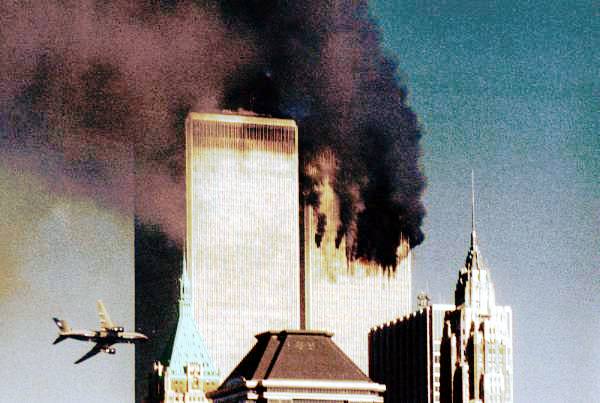
Ten years ago to this day, almost to the hour of which I am writing, commercial jetliners were highjacked by al Qaida teams armed with boxcutters, under the direction of Mohammed Atta, were flown into the towers of the World Trade Center and the Pentagon. A fourth plane, United Airlines Flight 93, believed to be headed to the US Capitol building, crashed in Pennsylvania when passengers led by Todd Beamer heroically attempted to stop the highjackers. The whole world watched - most with horror but some with public glee - on live television as people jumped out of smoke-engulfed windows, holding hands, to their deaths. Then, the towers fell.
From this day flowed terrible consequences that are still unfolding like the rippling shockwave of a bomb.

We look back, sometimes on the History Channel or some other educational program, at the grainy, too fast moving, sepia motion pictures of the start of World War I. The crowds wildly cheered troops with strangely antiquarian uniforms that looked reminiscent of Napoleon’s day, march proudly off to the war that gave Europe the Somme, Gallipoli, Passchendaele and Verdun. And the Russian Revolution.

After the armistice, the victors had a brief chance to reset the geopolitical, strategic and economic patterns the war had wrought and in which they were enmeshed. The statesmen could not rise to that occasion, failing so badly that it was understood even at the time, by John Maynard Keynes and many others, that things were being made worse. World War I. became the historical template for the short but infinitely bloody 20th century of 1914-1991, which historians in future centuries may simply describe as “the long war” or a “civil war of western civilization”.

There is a serious danger, in my view, of September 11 becoming such a template for the 21st century and for the United States.

On the tenth anniversary of 9/11, as we remember the fallen and the many members of the armed services of the United States who have served for ten years of war, heroically, at great sacrifice and seldom with complaint, we also need to recall that we should not move through history as sleepwalkers. We owe it to our veterans and to ourselves not to continue to blindly walk the path of the trajectory of 9/11, but to pause and reflect on what changes in the last ten years have been for the good and which require reassessment. Or repeal. To reassert ourselves, as Americans, as masters of our own destiny rather than reacting blindly to events while carelessly ceding more and more control over our lives and our livelihoods to the whims of others and a theatric quest for perfect security. America needs to regain the initiative, remember our strengths and do a much better job of minding the store at home.

The next ninety years being molded by the last ten is not a future I care to leave to my children. I can think of no better way to honor the dead and refute the current sense of decline than for America to collectively step back from immersion in moment by moment events and start to chart a course for the long term.

Now please visit the link below to read the post in full and the important embedded links.
The Nine Eleven Century

Monday, February 28, 2011

"The Wrong War" A must read for 2011


Bing West
Cpl. Dakota Meyer

I normally don't stop while reading a book to make a recommendation. But in the case of Bing West Marine combat veteran of Vietnam and current author of this unvarnished critique that author Steven Pressfield said was so gritty and real that, "you could practically scrape the dirt off its pages." The Wrong War: Grit, Strategy, and The Way Out of Afghanistan needs to be in the hands of every member of Congress, the Joint Chiefs and the President as well as every American who has supported our men and women these past decade since 9/11.

There are many fine reviews of this work, so I will let such esteemed voices as Dexter Filkins, Andrew Exum, and Col T.X. Hammes, USMC (ret) reviews stand as testament to the quality of this work.

Two stories stood out thus far in the first 100 pages. Amid the many trips that then 68 years young Bing West undertook, was one in the summer of 2009. Orders had come down, pushed from Karzai's office through General McChrystal to retake a small town surrounded by four hills leading into the Hindu Kush. The day before the unit was with was to move into the town, West became violently ill, vomiting and racked with diarrhea. After three trips to the latrine, West was taken by his tent mate Staff Sgt. Eric Lindstrom to the medics who after trying to stop the loss of body fluids from every orifice, evacuated West to the hospital in Jalalabad where a Dr. pronounced the verdict, "Cholera." Later that night as Bing lay connected to IVs, an officer from the company going into the valley, hobbled in dripping blood from an RPG round. The officer began to relate how the company was met by plunging fire of the worst kind and then after a while told West that the Sgt Lindstrom had not made it. The passage that Bing West writes a few paragraphs later about the randomness of death in battle and most poignantly about how Sgt Lindstrom had so carefully packed his gear as he was being evacuated to the hospital, leaves you with a still feeling that makes you want to pause and collect your thoughts before trying to read more.

This second story, has only officially surfaced a few months ago, when it was announced that a young Marine Cpl. with an all American name of Dakota Meyer, had been recommended to be the second living person in the Afghanistan War to receive the Medal of Honor. the official story until Bing's riveting account has been that Cpl. Meyer braved intense fire on at least two occasions in a vain effort to save four fellow Marine comrades who had been trapped in an ambush by over 150 Taliban. This story when fully told, will place Dakota Meyer's name alongside such legendary Marines as Sgt. Dan Daly, John Basilone, and soldiers Audie Murphy and Sgt Alvin York. I will not even try and paraphrase the story of Cpl. Meyers on that day in September of 2009 except to draw a thin outline of his bravery. When a carefully laid ambush by over 150 fighters brought in from Pakistan for the purpose of setting the ambush caught 13 Marines, 2 soldiers and 80 Afghan soldiers and border police in a three sided ambush without hope of breaking free. Meyer and a two companions over a period of six hours, made four trips into the firestorm in armored hummers each time returning with wounded and trapped Afghan soldiers. After almost every trip the hummers were so shot up that they would switch and plunge in again. Finally on the fifth trip guided by a Blackhawk, they got close to where the four marines lay. Meyers braved fire again on foot to fight to their position only to find they had been killed. It it this final action Meyers is nominated for the medal. Bing West wrote that Meyers had preformed the greatest act of courage ever displayed in this decade long war. There are no medals for saving the Afghan soldiers, but the story put together by West from interviews with Meyer and his fellow Marines at the time will make this young unassuming man's name a legend.

In closing, I would again urge anyone reading this to take your next twenty dollars and buy The Wrong War regardless of how you think about the politics, the "honor, patriotism and sacrifice", displayed in those pages will live as a testament to the valor of those who serve.

UPDATE:
An Interview with Bing West, by Small Wars Journal

Saturday, September 25, 2010

Reports of the Death of a Blog have been greatly exaggerated!


Mark Twain penned a response to the New York Journal after they published an obituary reporting his death advising them that they had mistaken the death of his cousin for him. At our last post we reported that Thomas Barnett had announce that he was ending his blog after a long run. Since then Tom has decided to change the Blog's format and go for content instead of the daily broadcast of comment and response to MSM news stories.

In that vein, GLOBLOGIZATION as Tom had dubbed his site, will continue as a platform to report on the major stories and events that shape our future. True to form, Tom Barnett offers up this on the recent release of Bob Woodward's new book Obama's War. Here are a few of the key observations.
Reading through the excerpts, about the only people who come off as calculating and restrained are Clinton, Gates and Petraeus. Obama and his civilians, to including his retired generals, all come off as rather interpersonally nasty, quick to panic, quick to point fingers, etc.
...My take-away: if voters don't like or don't trust Obama on the domestic/economic side, then this book does a number on any perceived salvation to be found in his foreign policy....
...I see a lot of energy being directed toward this book by insiders eager to be viewed positively by history (although none will on this score), but I don't see any of that anguish leading to any innovation....
The bottom line; Tom ends on this note.
And it ain't working. Not at all.
And frankly, at some point, Clinton needs to start thinking about what's good for her country and not just this administration, because she's big enough to force the issue.
Time to stop being satisfied with "keeping all the balls in the air," Madame Secretary. Time to issue some ultimatums--as in, "Either we get bold on this or I get gone and make my own case to the American people."
Woman-up, Hillary. Because you will be judged severely for not doing more.
All I can say, is get yourselves over to read the whole piece by clicking on the link.
Woodward's latest makes the Rolling Stone piece look tame by comparison

In a related post, Small Wars Journal linked this next piece by Robert Haddick in his continuing series This Week at War, where he continues the along the same path as Tom Barnett, by looking at the impact that Obama's War may have on the conduct of the war.

Read more:
This Week at War: Obama vs Team Surge

Saturday, June 26, 2010

"I hate newspaper men." General William T Sherman, 1863

General William T Sherman


The title of this post will become apparent as you read down further and absorb all the facts swirling around this last week as our military regroups after losing its field commander in Afghanistan. General McChrystal is not the first general taken from the field. During the Civil War we lost general officers as they were fired or shot down in battle. The Army survived and went on to win, actually coming out stronger whether the loss was intentional or the fortunes of war.

Amid the focus on Afghanistan, and the blizzard of analysis of how General Petreaus will turn the tide of war; is the continued back wash of what was McChrystal thinking? This post from Andrew Exum AKA, Abu Muqawama generated a bloom of over 70 comments that as Abu notes, are worth the price of admission.
Now that Gen. McChrystal is gone and consensus has formed that Preisdent Obama was well within his rights to have fired him, it's worth going back and looking anew at the Rolling Stone piece that got him fired. On the one hand, David Brooks in today's New York Times and Schumpter in the Economist lament the fact that public figures are now all the less likely to actually open up in front of journalists and speak freely. I don't think this excuses the mistake of thinking you could speak freely to a reporter from Rolling freaking Stone whose opposition to your strategy had already been established, but I take their points. On the other hand, Andrew Sullivan, Glenn Greenwald and others seized on a comment in the Politico that this would likely not have happened had Michael Hastings, the Rolling Stone reporter, not been a free-lance. The logic is that a reporter from the New York Times or the Washington Post would have been more servile to the people they cover because they do not want to burn their sources. After enduring some members of the White House press corps who do, frankly, seem to exchange favorable coverage of the administration for access, I can understand their complaint.
Read more:
Beers on the table, Journalist and the public figures they cover


This fine follow up over at Zenpundit calls attention to the rogue pachyderm in the basement of the White House.
Miss P. bangs pots and pans, shoots off fireworks, uses her knee to pound a bass drum while blowing a vuvuzela in an effort to draw attention to the Elephant in the policy room no one wishes to address.
It won’t work until a Pakistani-sponsored terrorist pulls off an act of catastrophic terrorism inside the United States and kills a large number of elite Americans in Manhattan or the Beltway. After that point, we’ll get serious and these views will become conventional wisdom.
I just hope the terrorists don’t succeed in Arizona or Kansas - the story will only make page 2, then and policy will stay the course:
Read More:
Pundita on Pakistan

Finally, comes a post from excellent blog friend Lexington Green, who offers this musing on a possible motive behind McChrystal's supposedly lasp in judgement in letting his subordinates pound back beers with the folks that General William T Sherman had this to say about:
"I hate newspaper men.They come into camp and pick up their camp rumors and print them as facts. I regard them as spies, which, in truth, they are. If I killed them all there would be news from Hell before breakfast.”

Lex offers this to begin his analysis of what might have been on McChrystal's mind that night in Paris.
… I think I would find that he set himself up intentionally to let the Rolling Stone guy get quotes that would end his tenure.
Gen. McChrystal is anything but a stupid or careless man. He is a cold and calculating strategist, both against the enemy, and in terms of his career and his rise to three star rank. He was also a warrior who would expend lives as needed to destroy the enemy and to win. And he was willing to take personal physical risks as well. Sacrifice was something he was willing and able to demand from himself and others.
The article tellingly notes that, over his career, he had a genius for knowing exactly where the lines are, and how much he could get away with. Yet, here, he stepped firmly over that line. We are supposed to believe this was inadvertent? That is not plausible. I cannot conceive of Gen. McChrystal making the Homer Simpson “d’oh!” noise.
He had to know he was doing that.
But why?
Read more:
If I could read Stanley McChrystal’s mind …

Saturday, April 3, 2010

Zenpundit asks! The End of Mexico? or The End of U.S. Sovereignty?


This morning I was going to put up a reads of the week post. But when I cruised by Mark Zafranski's blog, I was stopped in my tracks when I read his latest. The bigger question looms, how will this impact the sovereignty of the United States to secure our borders and ensure tranquility?

Mark began by quoting this from Fox News.
….Last week, at least 30 Mexicans from the town of El Porvenir walked to the border crossing post at Fort Hancock, Texas, and asked for political asylum. Ordinarily, their claim would be denied as groundless, and they would be turned back. Instead, they were taken to El Paso, where they expect to have their cases heard.
No one doubts that they have a strong claim. Their town on the Mexican side of the border is under siege by one or more drug cartels battling for control of the key border crossing. According to Mike Doyle, the chief deputy sheriff of Hudspeth County, Texas, one of the cartels has ordered all residents of the town of 10,000 to abandon the city within the next month.
Mark's own comments follow.
I saw this coming. I’m sure that so has anyone else studying insurgency or military history who stopped to give the matter five minutes of serious thought. There’s nothing magical about geographic proximity to the United States that would prevent this tactic, if applied widely and backed by lethal examples, from working. What has been done in the villages of Bosnia or Dar Fur can be done in towns of northern Mexico.
Read the whole piece.
The End of Mexico?

You will note after you read the link embedded above that this blog concurred and wrote on the same issue twice last year and the year before.


Mark's concerns are reflected in the citizens of Fort Hancock, Texas who probably feel they are channeling the lives of the people of Columbus, New Mexico who almost 100 years ago felt the sting of living next to the failed state of Mexico.
Fort Hancock, Texas -- Residents of this tiny Texas town say they're living in fear that Mexican drug cartel violence could spill over into the United States at any moment.
Locals here say they've seen a recent increase in illegal immigrants simply walking across the border and disappearing into the town, which lies just four miles from El Porvenir, Mexico, and 50 miles southeast of Ciudad Juarez, where 2,300 people were killed last year alone.
When I read each day that the cancer of lawlessness gains control like a reverse "Oil Spot Strategy" right on our southern border; and then read about this and this from the President of a country where we are spending our most precious resource to secure.


It becomes very hard to justify continuing to stay the course in Central Asia when it appears the tiger has creeped up to our open back door and threatens to come inside.


UPDATE: Chicago Boyz readers join the discussion, 56 and counting

Sunday, November 29, 2009

Draining the Swamp of Pristine Poverty


Chinese Armed Police


One of the rituals of Sundays past for many Americans was to settle in to a comfortable chair and digest the Sunday paper. Today, that role for me has been eclipsed by the internet where countless news links vie for attention. Usually I begin checking my blogroll, much like a trapper checks his trap line for the latest catch. My first stop today was Tom Barnett's blog where he offers this logic as to why we cannot continue along the path of being both the policeman and the social worker to the world without help.

Barnett begins:

Even if fewer troops are sent, or their mission is modified, the rough formula used by the White House, of about $1 million per soldier a year, appears almost constant.

So the math is easy: 40k troops for Afghanistan equals $40B.
This number has been around for a while, and I should have used it in all my books to make the point plain: We can play Leviathan given our force structure, but we are inherently limited by the same regarding the follow-on SysAdmin stuff, hence my oft-stated line that "America writes checks with its Leviathan that it can't possibly cash with its SysAdmin forces."
Tom's logic is spot-on, either we expand our tent to include those who have a vested interest or we will eventually retract our efforts until the next horrific incident prompts us to over react like a wounded bear.

Read more: The basic reality of America's limits to do the SysAdmin work

As I read Barnett's post, I was reminded of an article I read in the English language edition of China Daily during my recent visit to China. It was an opinion piece by David Shambaugh, a visiting Senior Fulbright Research Scholar at the Chinese Academy of Social Sciences' Institute of World Economics & Politics on leave from George Washington University in Washington, D.C.

Mr. Shambaugh echoes much of what Tom Barnett has advocated for years that now is the time to enlist China in addressing mutual security matters. Here is a taste of where he sees opportunity for cooperation between China and the United States.

At present, two potential new areas of cooperation are Afghanistan and western Pacific maritime security. The first will require adjustments in thinking in Beijing, while the second will need adjustments in Washington and Tokyo.
China could provide a great deal of useful security, aid, and other humanitarian assistance in Afghanistan - if it decided to and Washington and its NATO partners welcomed it. To date, Washington has not asked and Beijing has been reticent to contribute. But China could allow the People's Armed Police (Wujing) to help train Afghan police (a pressing need), and the People's Liberation Army could perhaps even participate in the multinational military operations against the Taliban and Al-Qaida (also China's enemies).
(my inclusion of link)
Shambaugh's piece was written prior to Obama's visit to China, whether that visit produces the results that both Tom Barnett and David Shambaugh envision, remain to be seen.

Read more: What more can China do to boost ties?

As our new strategy is finally rolled out this week amid the timid behavior of our current allies who have either cut and run or are readying their excuses,resignations-over-kunduz-airstrike. Continuing down the same path will eventually exhaust the patience of the American public. The time is ripe to enlist those who have a vested interest in draining the poverty swamp of creatures that Tom Barnett describes as; "1) the dictators that must maintain it to maintain their power; and 2) the fundamentalists who must detach from this "evil" assimilation process that liberates women, "ruins" kids, and gives people all sorts of "dangerous" ideas."

Saturday, July 11, 2009

Tell Me How This Ends, Afghan Redux


Afghanistan continues to command our attention as it begins to resemble Iraq in 2006. The tactics have turned to roadside bombs that killed American and coalition soldiers. The bloodiest month of the war in Afghanistan.

Small Wars Journal has up three related reports on the war in Afghanistan.

A post by brigadier Justin Kelly who questions the conventional wisdom that defeating insurgencies is all about winning Hearts and Minds.
His conclusion in part.

The twin propositions that “there is no military solution” to insurgencies and that “hearts and minds” approaches are the only the way forward are based mostly on wishful thinking. Fighting is unattractive to liberal democracies while good deeds put a song in our hearts. All western countries would rather build a school than raze a village. Unfortunately, building schools is only marginally useful in creating an acceptable peace. The true worth of such actions is only realised after the war—in extending and solidifying a peace that can, invariably, only be achieved by the application of force.

A hearts and minds approach represents a strategy of exhaustion and typically engages one of the insurgent’s principal strengths—time. For the West, strategic exhaustion is a critical vulnerability: “if you”re not winning, you”re losing”. In any event a “heart’s and minds” approach cannot provide security in the first instance, and can’t be fully realised until there is security.

Haddick focuses on the major thrust by 5000 U.S. Marines into southern Helmand province and the very real issue of the lack of support by the ANA.
A week into of the operation, there are now questions about when those Afghan forces, so vital to Nicholson’s planning, will arrive. In an interview with the Pentagon press corps, the brigadier general said that only 650 Afghan soldiers have accompanied the Marines into south Helmand. “I mean, I'm not going to sugarcoat it,” said Nicholson. “The fact of the matter is, I -- we don't have enough Afghan forces, and I'd like more.” Nicholson could not give a specific answer when asked when more might be on the way.

And in response to the shortage of trained Afghanistan forces.
McChrystal to Seek Expansion of Afghan Forces by Greg Jaffe and Karen DeYoung, Washington Post.

Gen. Stanley A. McChrystal, the newly arrived top commander in Afghanistan, has concluded that Afghan security forces will have to expand far beyond currently planned levels if President Obama's strategy for winning the war there is to succeed, according to senior military officials.
Such an expansion would require additional billions beyond the $7.5 billion the administration has budgeted annually to build up the Afghan army and police over the next several years, and the likely deployment of thousands more US troops as trainers and advisers, officials said.

Adding additional prospective to McChrystal's request to expand the Afghan Army is this recent article by C. J. CHIVERS in the New York Times.

It begins.
The Afghan foot patrol descended a mountain and slipped through a canyon. Then things went wrong. One Afghan soldier insulted another. And there, exposed on dangerous ground, a scuffle erupted.
The soldiers turned on each other with shoves, punches and kicks. One swung an ammunition can in a slow-motion haymaker. The patrol had already been hapless: a display of errant marksmanship, dud ammunition and lackluster technique.

“For months I’ve been telling everyone how proud I am of you,” seethed an American captain, yanking the Afghans apart. “Today you embarrassed me.”

The Obama administration has put a priority on expanding the size and abilities of Afghanistan’s security forces, first to help fight an expanding war and eventually to allow the Pentagon to draw down its troops. The task was inherited from the Bush administration, and the United States has helped to field roughly 170,000 Afghan soldiers and police officers in units created from scratch. In plans now under review, these numbers could double.

Read more:

The smaller trickle of blood and the unnoticed cha-ching of the cost to our treasury has kept Afghanistan out of the minds of most Americans. The uneducated or indoctrinated believe that we only need to bring all the troops home and our domestic and economic problems will be cured as if our elected officials will be given some magic wand to grant every entitlement. Afghanistan will consume our atttention for longer than any of us will desire. The question asked by General Pretraus of Rick Atkinson during the Iraq invasion in 2003 is still in play. "Tell me how this ends."

Sunday, May 31, 2009

The Blog Heard Round the World


Alexander Hamilton, American Grand Strategist.


A few days back I posted a thought prevoking link A Brief on the Accidental Guerrilla by Zenpundit. Since Mark first posted his brief essay it has generated additional comments by such diverse bloggers as Information Dissemination - New Doctrines Without Strategic Foundations, Abu Muqawama - Dogs and cats, living together. Mass hysteria!, MountainRunner -Recommended Reading: Kilcullen Doctrine,The Strategist - Sunday reflection: on “The Accidental Guerrilla”,SWJ Blog - Weekend Reading and Listening Assignment and grand strategist, Thomas P.M. Barnett - Safranski on Nagl on Kilcullen.

Joining that list is this thought provoking analysis from Joseph Fouche of Committee of Public Safety. His post distills the position articulated by Dr. John Nagl.

….In direct opposition to the ideas that drove American intervention policy two decades ago, Kilcullen suggests ‘the anti -Powell doctrine’ for counter-insurgency campaigns.
First, planners should select the lightest, most indirect and least intrusive form of intervention that will achieve the necessary effect.
Second, policy-makers should work by, with, and through partnerships with local government administrators, civil society leaders, and local security forces whenever possible.
Third, whenever possible, civilian agencies are preferable to military intervention forces, local nationals to international forces, and long-term, low-profile engagement to short-term, high-profile intervention
.

He then adds Mark's critique.

Zen correctly criticizes this “doctrine” on three grounds:

1. “Kilcullen’s three principles are an operational and not a genuinely strategic doctrine.”

2. “[T]his operational doctrine requires a sound national strategy and grand strategy if it is to add real value and not merely be a national security fire extinguisher.”

Then he adds Galrahn's comments:

I am beginning to wonder where [COIN] becomes a priority towards national security, and how we get to the point this becomes national security as opposed to imperialism. Understanding a culture in COIN is a means by which we implement cultural influence, and potentially force cultural adaptation. Toward what strategic national objective in national security do we participate in this doctrine?

I ask this question because Zenpundit is on to something when he calls this “The Kilcullen Doctrine.” I think there is enormous potential here for positive and effective results, I’m just not sure I see the answer to the “why” question though…

Joseph then turns up the flame on this debate by posing this question.

I wonder if asking for a grand strategy is asking too much from the American system of government. There have been few epochal grand strategic thinkers in American history: Hamilton, Wilson, Kennan, perhaps Jackson, Mahan, FDR, or Kissenger. Hamilton was the greatest of all. Talleyrand, himself an epochal figure whose grand strategy of legitimism ruled Europe from 1814-1914, once wrote, “I consider Napoleon, Fox, and Hamilton the three greatest men of our epoch, and if I were forced to decide between the three, I would give without hesitation the first place to Hamilton”. Hamilton adopted a system outlined in three of the greatest grand strategic documents ever written (First Report on Public Credit, Second Report on Public Credit, Report on Manufactures) that was so potent that even his Jeffersonian opponents adopted it whole hog by 1815 and followed it, excepting a Jacksonian interlude between 1830-1861, with stunning success until 1945. The first grand strategic dilemma that the Hamiltonian grand strategy encountered was the spectacular and sudden elevation of American power during World War I. America went from playing the role of challenger and spoiler to the role of nascent hegemon. This was beyond even Hamilton’s seemingly premature and grandiose predictions of future American greatness:

"I shall briefly observe, that our situation invites, and our interests prompt us, to aim at an ascendant in the system of American affairs. The world may politically, as well as geographically, be divided into four parts, each having a distinct set of interests. Unhappily for the other three, Europe by her arms and by her negociations, by force and by fraud, has, in different degrees, extended her dominion over them all. Africa, Asia, and America have successively felt her domination. The superiority, she has long maintained, has tempted her to plume herself as the Mistress of the World, and to consider the rest of mankind as created for her benefit. Men admired as profound philosophers have, in direct terms, attributed to her inhabitants a physical superiority; and have gravely asserted that all animals, and with them the human species, degenerate in America–that even dogs cease to bark after having breathed a while in our atmosphere. Facts have too long supported these arrogant pretensions of the European. It belongs to us to vindicate the honor of the human race, and to teach that assuming brother moderation. Union will enable us to do it. Disunion will add another victim to his triumphs. Let Americans disdain to be the instruments of European greatness! Let the thirteen States, bound together in a strict and indissoluble union, concur in erecting one great American system, superior to the controul of all trans-atlantic force or influence, and able to dictate the terms of the connection between the old and the new world!"

Hamilton's words ring out across the ages reminding us that greatness flows from the pens of patriots whose motives are love of country, not personal gain and power.

Drawing on others who have tried to articulate a grand strategy, Joseph offers his own thoughts to carry this important dialogue to the next level.

In part he writes:

If we’re looking for a rationale behind the Kilcullen Doctrine, perhaps this would suffice. America expects a world of nations. In many parts of the world, there are no nations. America’s grand strategy should be to make a world of nations. This means that grand strategy should aim to establish a global dictatorship of law. Any law will do, as long as it keeps a nation’s citizen out of other nations’ hair. The maximal expression of this grand strategy can be American soldiers going into every nook and cranny of the ungoverned world and using COIN-fu to magically subject the riotous locals to the power of law or it could be the global minimum of collectively punishing a group of tribesmen who don’t think of themselves as a nation as if they were a nation. It certainly encouraged the indigenous inhabitants of this continent to develop a sense of nationhood.


I whole heartily recommend reading Joseph's post and the other's linked above. This is one of the most important topics facing our future. If we as a nation, by the very nature of our fluid form of governance, has a hard time formulating a grand strategy we citizens must join the debate with informed voices, un-encumbered by partisan politics and motivated by love of country.

Saturday, May 2, 2009

Petraeus: "We have two weeks to save Pakistan"

Admiral Mullen and General Petraeus
Islamabad in relation to the Northwest Frontier and the Taliban
Pakistan Nuclear Facilities
.
This story broke last night and was reported in the Daily Telegraph by Isambard Wilkinson. In a bit of what if and if it happens, what caused it will accelerate the debate that we took our eye off the ball, when we turned our attention to Iraq, then in a fit of hubris tried to solve the problem by borrowing against the farm and eating our seed corn as we stumbled on for three years, like a blinded elephant in Iraq and let the Taliban and AQ reconstitute themselves in sanctuaries in Pakistan. Now we are faced with the potential of having to escalate the war to a degree not seen since Vietnam or Korea to prevent Pakistan's nuclear weapons from falling into the hands of those who would not hesitate to pull the trigger and escape to paradise. Talk of what we might do is too sensitive for open discussion, we can only stand by and wish General Petraeus, Admiral Mullen and finally President Obama the vision and wisdom to make the right decision.

American officials have watched with growing anxiety as Taliban fighters have strengthened their grip on north-western Pakistan.

Militants advanced to within 60 miles of Islamabad, the capital, last month and were pushed back only when the US put pressure on Pakistan to launch a counter-offensive.

Gen Petraeus, the head of Central Command, which covers all US forces in the Middle East and south Asia, is reported to have said that “the Pakistanis have run out of excuses” and now accept that tough action has to be taken to guarantee the government’s survival.

Gen Petraeus, who oversaw the American troop surge credited with quelling the insurgency in Iraq, is reported to have wearied of Pakistan’s excuses for failing to take on the Taliban.


Sunday, April 26, 2009

April and the Return to Conflict.


Just to see if you're paying attention!

Piracy April 2009


April is the first full month of spring and just as life begins to bloom after a long winter of dormancy, the human pursuit of war stirs itself and becomes manifest amid to the pockets of disconnected societies. Piracy took center stage for a while this month as Americans celebrated the rescue of Captain Richard Phillips, just before they were forced to return to navel gazing and to consider national self-flagellation as a way to make amends for decisions made by the previous administration over the use of waterboarding to extract information from terror suspects.

While all this is going on, piracy has been on the rise for the first three months of 2009, with April now standing at 44 seizures of ships by pirates around the world. Galrahn of Information Dissemination, has two posts among many that focus on this problem. The first recounts the record set this month for pirate attacks.

Galrahn's final comments set the tone to backtrack and read the whole post and examine the accompanying map that illustrates the growing menace of global piracy.

Given how the pirates have picked up on modern technology, they are probably watching the weather just like the experts. In the case of piracy in the Strait of Malacca earlier this decade, the massive south east Asian tsunami played a major role in curbing the activity. One thing to watch for is a tsunami that could potentially hit one of these pirate cities and wipe out the boats used for piracy. Weather is a significant factor one should always keep an eye on.

Read more:
April a Record Month for Modern Piracy

In this second post, Galrahn offers several options that have an historic ring that will leave an astute reader humming the Marines Hymn.

From the Halls of Montezuma,
To the shores of Tripoli;
We fight our country's battles
In the air, on land, and sea.....

This analysis assumes that if the policy regarding the use of military power stays at the current level, which is in essence ineffective despite current record levels of international naval assistance (which will dwindle in the weeks ahead), the problem will get worse as the weather improves over the next few months and the Obama administration will see its leadership credibility globally erode. This is a potentially debatable position, but history does not suggest ineffective action in the face of serious security problems that are only getting worse leads to good things.

This raises the question, if we know the diplomatic efforts are going to take a long time to develop, what tactical actions should the Obama administration approve for the military to buy time for the long term Somalia policy to form? This analysis looks at three possibilities: engage from the air, engage on land, and engage at sea.

Read the whole post to see what tactic Galrahn favors in this well thought out essay.
Tactical Options for Fighting Somali Pirates


As a nation we struggle to swat away at the bees that seem to sting us at will while our elected officials dither in a return to hyper-divided politics along two fault lines. Big war industrial vs the COIN advocates and ideologues who demand prosecution for past sins vs let's do anything short of pulling fingernails to protect the country. The idea of redirecting the country efforts will take a consensus of agreement like those worked out by such visionary leaders as Theodore Roosevelt, FDR, and Eisenhower. Many had high hopes that President Obama would be in the mold of these past leaders whom brought the experience of consensus building to the office. The ball is in his court as to see if he is able to keep the ideologues of both sides from tearing the country to shreds under his watch.

Meanwhile around the world, several countries have begun to redirect the focus of their national defense posture to reflect the changes that they perceive in the future. The following links take a brief look as some of the alignments by two of our allies and a troubling development by the hermit kingdom.


Great Britain
This short article by Isabel Oakeshott and Michael Smith, The Times looks at Britain's plan to focus on the future by adjusting her forces to confront the kinds of wars she has fought the past half century.

BRITAIN’S special forces are to be dramatically increased under plans being drawn up by the government.

John Hutton, the defence secretary, will this week signal radical reform of the armed forces in response to “lessons learnt” from the war in Afghanistan, where specialised units are seen to be playing a vital role.

Read more: SAS to Expand in Army Shake-up

Australia
Is also planning for contingencies as they encounter a new pallet of defense issues as noted in this article by Patrick Walters in The Australian.

Kevin Rudd is set to announce Australia's biggest military build-up since World War II, led by a multi-billion-dollar investment in maritime defence, including 100 new F-35 fighters, a doubling of the submarine fleet, and powerful new surface warships.

Read more:White Paper Orders Huge Military Build-up

In a companion piece, Patrick Walters takes a closer look at the proposed increase in Australian Naval power.

The naval and air power build-up is the key component in a more powerful defence force that the Prime Minister sees as essential to preserving Australia's security in a more turbulent world.
The white paper is the latest manifestation of Rudd's ambition for Australia to be able to act as a significant middle power in the Asia-Pacific region.

It is also a recognition that the power balances in our region are undergoing a historic shift with the rise of China and India.
Rudd understands that in a generation's time Beijing's formidably expanding military power could challenge the long-held military dominance of the US in east Asia with destabilising consequences for regional security.

And finally, the hermit kingdom is again acting like a sociopathic step-child, who finds that when the focus seems to stray from providing them handouts, that banging nuclear fuel rods together brings the great powers running with armloads of goodies to sustain them until the warehouses are empty.

North Korea
This in from an article in the New York Times by CHOE SANG-HUN.

SEOUL, South Korea — North Korea announced Saturday that it had begun reprocessing thousands of spent nuclear fuel rods, adding that it would use plutonium extracted from the rods to make nuclear weapons.
The announcement came hours after the United Nations Security Council placed three North Korean companies on a United Nations blacklist for aiding North Korea’s missile and nuclear programs.

Reading about them has become tedious, as they stick their proverbial thumb in the eye of the six powers and the UN.


Well, that should give any reader enough to contemplate and for most, drive them to flee to their favorite spring resting place to in bide in an adult beverage. Let us hope that We as a nation keep our eye on the ball and the future. It is not the wall we must worry about running into, it is the small things we can trip over. Looking back with a vengeful eye will cause us to trip and fall and break our neck over one of those small things in our path.