Showing posts with label foreign policy. Show all posts

Saturday, September 3, 2011

Three great reads to ponder over a long weekend

Fall of Tripoli

September arrived with Col. Gaddafi's downfall after several months of battles that saw insurgents, supported by NATO air strikes and newly revealed US support. The blogs also seemed to take on a life of their own, in a reversal of Spring to bloom in the days preceding Fall, with posts that are filled with enough rich brain nutrition as to make an avid reader as giddy as a stallion with a bucket of fresh oats. I picked out a few of the best, to give you a tasty meal for your conscious mind to devour. First off, if you at first don't like the flavor of the article, I challenge you to not only read it but ponder the thesis of each. Then you are welcome to reject it, file it away or post your comments back on the original sites.
The first course is served up by Mark at Zenpundit who raises important points about the latest acronym R2P. No it is not a new Star Wars character, but means Responsibility to Protect the doctrine now being flaunted as the justification for Libyian intervention.

Mark gets right into discussing the doctrine with this introduction.
There has been much ado about Dr. Anne-Marie Slaughter’s ennunciation of “Responsibility to Protect” as a justification for the Obama administration’s unusually executed intervention (or assistance to primarily British and French intervention) in Libya in support of rebels seeking to oust their lunatic dictator, Colonel Moammar Gaddafi. In “R2P” the Obama administration, intentionally or not, has found it’s own Bush Doctrine, and unsurprisingly, the magnitude of such claims - essentially a declaration of jihad against what is left of the Westphalian state system by progressive elite intellectuals - are beginning to draw fire for implications that stretch far beyond Libya.
This is an outstanding post that really showcases Mark as a master thinker as he adds his own astute comments and links three rebuttal posts to Dr. Slaughter's thesis.

I highly recommend reading Mark's post in full, as well as the linked posts to give yourself a full understand how R2P might come back to do, as Mark suggests.
Who is to say that there is not, somewhere in the intellectual ether, an R2P for the the environment, to protect the life of the unborn, to mandate strict control of small arms, or safeguard the political rights of minorities by strictly regulating speech? Or whatever might be invented to suit the needs of the moment?
When we arrest a bank robber, we do not feel a need to put law enforcement and the judiciary on a different systemic basis in order to try them. Finding legal pretexts for intervention to stop genocide does not require a substantial revision of international law, merely political will. R2P could become an excellent tool for elites to institute their policy preferences without securing democratic consent and that aspect, to oligarchical elites is a feature, not a bug.
R2P will come back to haunt us sooner than we think.
 Read more:
R2P is a Doctrine Designed to Strike Down the Hand that Wields It

US Army

US Navy
US Marines the Premier Forced Entry Team
US Air Force

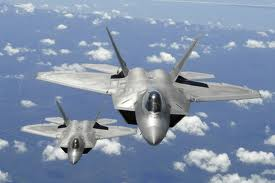
Next up we visit a topic that is as old as the country itself,when one branch of the military asks the value of continued spending of the bulk of the nation's defense allocation on another branch. This comes in the light of the wind-down of our boots on the ground commitments in Southwest Asia. Chris Rawley penned this inquiring post at Information Dissemination that asks a question that might be on the minds of many, in view of the past ten years war.
A number of interesting learning points have arisen from the Libyan conflict. Foremost among them for me is the need to massively downsize the United States Army. More about that heresy in a minute… Galrahn and Robert Farley have discussed the merits and shortcomings of airpower in relation to the US/NATO/various third-party countries' campaign against the Gadhafi regime. They both make some interesting points. However, what the Libya campaign best demonstrates, or more appropriately, reiterates, is the utility of the special ops-airpower team. And by airpower, I’m referring to service-agnostic airpower in all its’ forms, although biased towards the flexibility sea-based aircraft provide.
Chris's post generated over 145 comments and prompted this update:
UPDATE: To save readers from going through 80+ postings and provide some clarity: what do I mean by "massive" cuts to USA force structure? How about at least 25% of active duty force structure? Honestly, I won't venture to put out an exact number, but I do know that 5% cuts applied to all services across the board is a disservice to national security. Designing a future force for "most likely" scenarios, as well as black swans doesn't mandate that we do things the way we always (or at least recently) have done them. And while 25% may not seem like a large number, when you put it in dollars and manpower, it's pretty "massive."

Read more.
Libya Lessons: Supremacy of the SOF-Airpower Team… Or, why do We Still Need a Huge Army?

This post led to a second post by Rawley after he received considerable feedback and personal emails regarding his raising this topic.
I’ve received significant feedback on this post , ranging from private emails calling these ideas “brilliant” to a blatant dismissal of any arguments that recommend cutting the army by a single soldier. More importantly, regardless of one's opinion on my arguments, the discourse on this topic has been energized. Since my post, a few timely articles were written discussing this debate. Looks like the Army itself is talking about eliminating 10 out of 45 active BCTs, which is just short of the 25% SWAG I recommended (no, I didn’t have inside information on this).

Was I too parochial? Guilty as charged, except that I’m also defending the Marine Corps, Air Force, and multi-service SOF community over the Army conventional force. However, I’m not sure how one can take a position on force reductions without being parochial, unless one thinks that across the board cuts make any sort of strategic sense (I don’t). I was also accused of coming to the right conclusion for the wrong reasons. Fair point, but I didn’t intend to capture all of the reasons that the army should be reduced before the other services in a single post. Those arguments have been made extensively at every draw-down, most recently during the early 1990s, post-Cold War/ODS era.
Read more:
Why Do We Still Need a Huge Army? - Round II


I am an Army guy and hold personal parochial feelings since my days in Army green. That said, we can still have the most lethal conventional force able to meet any commitment at the levels suggested by the Army itself of 35 BCT's. The waste in dollars spent the past ten years prosecuting the wars in Iraq and Afghanistan has been obscene and should never be repeated. A mean and lean Leviathan force is the best way for us to protect our interests, defend our homeland and be an influence for global good. That means a broad approach that continues to recognize that we are a maritime nation and must continue to be so in order to remain a great power. But also maintain a standing Army honed to a razor's edge so as to dissuade any opponent from trying the unthinkable.

Wednesday, April 1, 2009

The Armchair Admiral and the Zen


The observations of galhran of Information Dissemination have graced this blog before and today is no exception. Joining in, is Mark of Zenpundit who offers a counter-point to Galrahn's post on Mexico.

First, in a followup to a post I wrote last week Naval Hearings, The Ships, The Crews and The Mission in The 21st Century comes this in depth review of the hearings written in a balanced tone that finds more in common among those testifying than previously mentioned.

Both Dr. Barnett and Dr. Thompson agreed on two interesting points. First, if we build an interoperable national fleet in the spirit of the Navy's maritime strategy we will get good results. Second, the fleet is not likely to get larger without smaller, cheaper warships. I enjoyed the way Dr. Barnett puts it in his written testimony:

Read more:

And then in his capacity as a guest blogger at for the United States Naval Institute Blog,

Galrahn adds his thoughts to the conversation began by Mark of Zenpundit about whether Mexico is a failed state or as Galrahn suggests a weak state.

Quoting DNI, Admiral Dennis Blair.

"Mexico is in no danger of becoming a failed state. [Let me] repeat that. Mexico is in no danger of becoming a failed state. The violence we see now is the result of Mexico taking action against the drug cartels."

The important observation by Galrahn addresses our COIN strategy and raises an interesting point with this statement.

My point would be this: there is no value in the cartels overthrowing the Mexican government because its existence helps them more than its absence helps them.

But this is my larger point. There are currently zero, none, nada 4GW/COIN/Whatever military solutions for failed states; our emerging 4GW/COIN/Whatever doctrines, strategies, and theories only apply for weak states that have legitimate governments that can be supported. Failed states are problems that can be handled, even in an ugly way, by conventional military forces. The danger to US strategic interests is not failed states, as is often claimed, rather the real danger to US strategic interests always comes from weak states.
Read More:

I agree with his final assessment that if the cartel's take out the legitimate government our options become certain. Currently, we have few options other than supporting the current Mexican government in their efforts to overcome the cartel's grip. The important issue is that another voice is added to the conversation, which is what Mark was attempting to do, by raising the question in the first place. It is better for us to prepare for every contingency by launching discussions that air the views of all who look south with concern for our neighbor. Mark, has responded with Galrahn's post this way.
I found Galrahn’s argument to be very intriguing. There’s the issue of Mexico specifically in his post and then Weak States being worse than Failed States as a general rule. First, Mexico:

The thought experiment I penned previously aside, Mexico is not yet a Failed State and I hope it does not become one - though I would not wager a mortgage payment on it staying away from catastrophic failure. Mexico is definitely, in my view, already a Weak State suddenly resisting the process of being “hollowed out”, slowly, by vicious drug cartels. I wish President Calderon well in his efforts to crush the narco networks, but just as America cannot avoid admitting that our drug laws are impacting Mexico severely, let’s not let the fact that Mexico’s ruling oligarchy has also brought this disaster on themselves with their self-aggrandizingly corrupt political economy escape comment.
Mark concludes by asking for input.
That brings us to the general question of, is a Failed State better or worse than a Weak State whose tattered shreds of international legitimacy prevent robust foreign intervention? I am going to “punt” by inclining toward judging on a case-by-case basis. “Failed State Botswana” is not likely to impact the world very much nor is “Functional State Congo” going to look very good next to anything except Congo as the Failed State that it is. Now “Failed State China” or “Failed State Russia”, that has consequences that are the stuff of nightmares.
What do you say? Which is worse: Weak State or Failed State?
Both men are carrying the ball forward and presenting forums to discuss the issues before they become a full blown crisis that catch America unprepared. One of the main examples carried forth by Thomas Barnett in Great Powers is for people to get involved and in effect create their own public policy. For Americans this means discussion between all those interested in their nation and a free society I invite everyone who reads this to take the time to consider this issue, read, join the discussion it's free and will be welcomed by all.


Sunday, March 22, 2009

Two Reads on Foreign Policy

G20 Membership
Chinese Congress Hall

Great Powers by Thomas Barnett


The Bellum: A Stanford Review Blog. since it's launch in February has become a must read blog that never fails to raise the level of attention on important issues as diverse as food, Fungi Don’t Know Borders and interviews, John Nagl on the Media and COIN. In this next post they turn their attention to U.S. foreign policy and the direction it should take in the coming meeting of the G20.

They begin by citing:
Esteemed strategist Leslie Gelb’s Sunday editorial, It’s Time to ‘Go to Strength’ on Foreign Policy, recommends that US foreign policy focus on areas of comparative strength, steadily withdrawing from those arenas where regional complexities prevent American force from being a “sure thing”. Gelb’s argument hinges on the idea that US foreign relations require a black-and-white decision—either leaders can focus on hotspots like Afghanistan, Iraq and Iran at the expense of developing “greater power” alliances or they can engage fully in proven modes of diplomacy in a way that avoids unilateral involvement. Parsing this construction, unilateralism is weakness and US-directed multilateralism is strength.

They continue:
Gelb’s underlying thesis– that “this is the worst time to link our fate to crises beyond our control [and] our strategy has to focus on anchors that provide stability”—is well-received.

Bellum then poses this question.
But is the United States’ present choice really equivalent to 1946 as Gelb seems to suggest?

And counters with this opinion.
Bellum takes exception with the implication that international terrorism can be fenced in using the same tools—“containment and deterrence”—that were used against the Soviet Union.

The final analysis from Bellum follows:
It’s understandably unsettling for a man whose career has spanned a period characterized by unquestionably dominant US power, but the financial crisis requires that we sit and wait. Certainly, China’s no Soviet Union and cooperation offers mutual benefits, but it’s not apparent that the US has the flexibility to take charge in a coalition-forming process. Before we can pursue multilateralism, it’s critical that we first ensure our affairs are in order within the G-2. China is likely to multiply its influence through the course of the global economic recovery, but if US policymakers are selectively deferential to Chinese preferences, America can remain at the strategic forefront of geopolitics.


In a related post Tom Barnett column this week, takes on the the threat of great power war and deftly deflates some of the pressure being pumped up by the big war planners.

While difficult to keep in mind amidst today's economic nationalism, a global middle class of unprecedented size rises in the emerging markets of the East and South. This accomplishment logically ensures the continuation of great-power peace, as America's grand strategy of spreading its liberal trade order reaches its global apogee.

Countering this view is a growing cohort of academics and analysts who insist that such rising consumer demand will inevitably trigger "resource wars" among the world's great powers, with climate change as an unforgiving accelerant.

Barnett's answer to this rhetorical opinion.
A little secret here: A good portion of America's defense establishment desperately needs the long-term specter of resource wars to continue justifying the big-war-centric structure of our armed forces. It needs to sell this vision of future conflict because, without it, the small-wars community will triumph in a looming budgetary battle that will define the Obama administration's legacy in national security affairs.

To find out why read the whole column linked below. Here is Barnett's conclusion based on the evidence that awaits your perusal.

Don't believe me? Imagine a world where there's no Chinese demand for U.S. debt or no U.S. demand for Chinese exports.

Dreaming up future "resource wars" to obviate our military's necessary adjustment to this era's security tasks will not render them moot. Indeed, like Somalia's recent pirate epidemic, they invariably attract the collaborative efforts of other great powers, like China and India, which have no choice but to defend their growing economic networks.